A LITTLE DIRECTION. ROOM TO EXPLORE.
Your next chapter can start with one small thing.
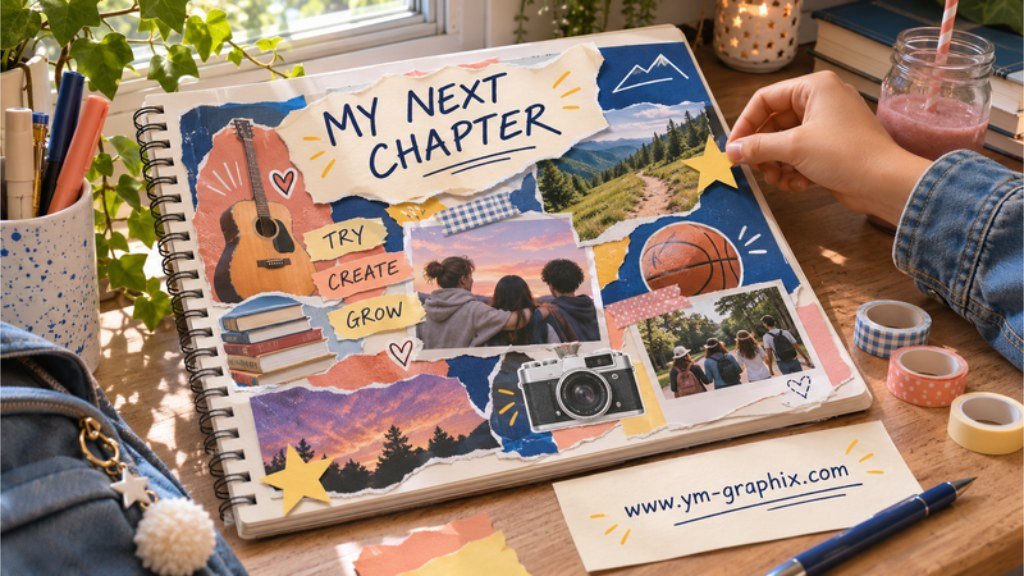
A vision board for teens is a collection of pictures, words, and small goals that shows what you want to explore, practice, or make space for. Add school goals, hobbies, friendships, everyday routines, and future possibilities. Then pair your favorite images with actions you can actually try.
You do not need a perfect life plan, a designer bedroom, or a board full of expensive things. A guitar cutout might mean learning your first song. A trail photo might stand for more afternoons outdoors. A handwritten “speak up” could be your reminder to ask one question in class.
This guide brings together 12 teen vision board ideas, three example layouts, prompts to help you choose, and five optional digital resources for building your own. Start with what feels like you today; leave room for that to change.
Disclosure: This article contains affiliate links. If you purchase through them, we may earn a commission at no extra cost to you.
What belongs on a vision board for teens?
Choose three to five areas that matter to you rather than trying to represent your entire future. A useful starting mix is something you want to learn, something you enjoy, someone or something you care about, and a habit that would make ordinary days easier.
For each area, collect one image, one short phrase, and one next step. That gives your collage both personality and direction. You can keep a dream destination on the board while choosing a much smaller action, such as finding a local walking route or learning a few words in another language.
For a broader list of categories, explore our ideas for what to put on a vision board. Here, the focus is on teenage life beyond grades: trying things, finding your interests, and building a day you enjoy.
12 vision board ideas for teens that leave room to grow
Treat these as a menu. Pick the ideas that feel interesting and skip anything that sounds like someone else’s checklist. Your board can be colorful, minimal, sporty, bookish, or a mixture that only makes sense to you.
01 · Learn something because you want to
Choose a skill you would enjoy even without a grade: drawing characters, cooking one meal, making a short film, coding a tiny game, or learning a song. Use an image of the activity rather than only a picture of someone who is already excellent at it.
Picture idea: A pencil, guitar pick, recipe card, or camera.
A next step: Choose one beginner tutorial and try the first exercise.
02 · Make school feel more manageable
A school section does not have to be a wall of perfect marks. It can represent asking for help earlier, remembering materials, or starting homework without losing the whole evening. Pick one change within your control.
Picture idea: A simple checklist beside the words “Start small.”
A next step: Write down tomorrow’s three most useful tasks.
03 · Make space for friendship
Show the kind of connection you want: shared walks, a game night, listening, or staying in touch. Focus on how you want to show up, rather than trying to control who likes you. Use a symbol or drawing if you would rather keep people’s photos private.
Picture idea: Two mugs, a picnic blanket, or a handwritten invitation.
A next step: Invite someone to a specific, simple activity.
04 · Try a hobby before deciding if it is “your thing”
Give yourself a small exploration corner. Photography, robotics, theater, gardening, dance, and creative writing can sit together here. You do not need to turn every interest into an achievement or a future career.
Picture idea: Three small pictures with the heading “Things to try.”
A next step: Look up one club session or borrow a basic tool.
05 · Build confidence through small moments
Choose a situation where you would like to participate more: introducing yourself, sharing an idea, or asking a question. A board cannot guarantee confidence, but it can remind you of a manageable experiment you decided to try.
Picture idea: A speech bubble with “My ideas can take up space.”
A next step: Prepare one question before a lesson or club meeting.
06 · Create routines that give you breathing room
Use this section for ordinary habits that support your day: packing your bag, taking screen breaks, keeping a water bottle nearby, or making time to wind down. Keep the message kind and practical.
Picture idea: A lamp, a book, or a small “Pause” card.
A next step: Pick one evening when you will pack your bag before bed.
07 · Move for enjoyment
Think about what feels fun: biking, shooting hoops, swimming, dancing, or walking with a friend. Show activities you want to do and skills you want to practice. You can leave appearance goals and comparison photos out of the collage.
Picture idea: A basketball, bike, trail, or favorite dance shoes.
A next step: Make room for one enjoyable session this week.
08 · Save toward something meaningful
A savings goal can be modest: a secondhand instrument, art supplies, a trip with friends, or a gift. Add the thing you care about and a simple progress marker. If you do not have money to set aside, include learning about costs or finding a borrowing option.
Picture idea: A small envelope, coin illustration, or progress bar.
A next step: Find the price, then decide whether saving, borrowing, or another option fits.
09 · Give your space a little more personality
Choose a corner rather than an entire dream bedroom: a reading spot, a display for your drawings, or a shelf for current projects. A handmade sign or rearranged desk can count. Use what you already have before adding a shopping list.
Picture idea: A desk sketch, a color swatch, or a little paper star.
A next step: Clear one small surface and place something you love there.
10 · Collect experiences close to home
An experience section can include visiting a museum, watching a sunrise, having a picnic, or exploring a new part of town with someone you trust. Big travel dreams can share space with things you can enjoy sooner.
Picture idea: A local map, a ticket-shaped note, or a park photograph.
A next step: Pick one realistic outing and check what it needs.
11 · Help with something you care about
Show a cause, community project, or small act of kindness that matters to you. Think about a school event, a community garden, or helping someone learn something you know. Choose an age-appropriate activity with any permission or support it needs.
Picture idea: A plant, a helping-hand drawing, or a community notice.
A next step: Ask a teacher or trusted adult about one suitable opportunity.
12 · Explore future possibilities without locking them in
Your future corner can hold questions: What work looks interesting? What would I like to learn more about? What sort of day would I enjoy? Include several possibilities. Changing your mind later does not make the board a failure.
Picture idea: A question mark beside two or three different paths.
A next step: Ask someone what their everyday work is actually like.
Three teen vision board examples to make your own
These are original layout ideas, not previews of the downloadable products below. Borrow the structure, then change the pictures and wording to suit your life. None of the examples depends on a particular gender or a perfect aesthetic.
Example 1 · The creative explorer
Look: cobalt blue, cream paper, orange accents, uneven photo edges, and little hand-drawn stars.
Center: “Make more things.” Around it, place a camera image, a sketchbook, a guitar, a local museum ticket shape, and a small photo of a place that sparks ideas.
Three action notes: take five photos on a walk; finish one small drawing; learn the opening of a song. Leave a narrow strip for new interests.
Best fit: someone with lots of interests who wants permission to experiment.
Example 2 · A calmer school week
Look: soft green, butter yellow, clean sections, and plenty of breathing room.
Center: “A little more room.” Use four small sections for school, friends, rest, and something fun. Give each section one image rather than packing it with tasks.
Three action notes: ask for help with one difficult topic; prepare tomorrow’s bag; make time for a walk or a chat. Keep a blank space for something that went well.
Best fit: someone who wants their board to feel encouraging rather than demanding. For a more academic version, see our student vision board ideas.
Example 3 · The small-adventure bingo board
Look: a simple grid, bold marker lettering, and a different tiny doodle in each square.
Center: “Try something new.” Fill nine squares with small experiences: cook a meal, visit a new place nearby, try a club, finish a book, make a gift, learn a skill, plan a picnic, ask a question, and make something just for fun.
How it works: color a square when you have tried the activity. You can change a square that stops being useful. There is no deadline or reward you have to earn.
Best fit: someone who prefers specific experiences to a traditional dream-life collage.
How to make a vision board for teens in one relaxed session
Set aside around 30–45 minutes as a starting point, or split the project across a few short sessions. You can use paper and scissors or an editable digital layout. The important part is choosing what belongs on it, not how long it takes.
- Choose your format. Use a notebook spread, cardboard, corkboard, or digital canvas. Start small if a large board feels like too much.
- Answer three questions. What do I want to try? What do I want more time for? What would make an ordinary week easier?
- Collect a small pile. Gather about 8–12 pictures, a few words, and any personal scraps you want to use. Your own drawings and photos work well.
- Arrange before attaching. Put one main phrase near the center. Group related pictures and leave some empty space. Move things around until you can read the main idea quickly.
- Add three next steps. Write actions you can begin without having to become a different person first.
- Choose where it lives. Display it where you will enjoy seeing it, or keep it inside a notebook if it feels personal.
For a fuller walkthrough of materials and layout, follow our step-by-step vision board guide. For this teen version, keep coming back to the same question: would I choose this goal if nobody else saw my board?
Five creative resources for your teen vision board
These optional downloads solve different parts of the project: arranging a board, adding words, or deciding what to do next. You can make a complete board with paper and your own pictures, too. Choose only the resource that fills a gap in your project.
Best for an easy first layout
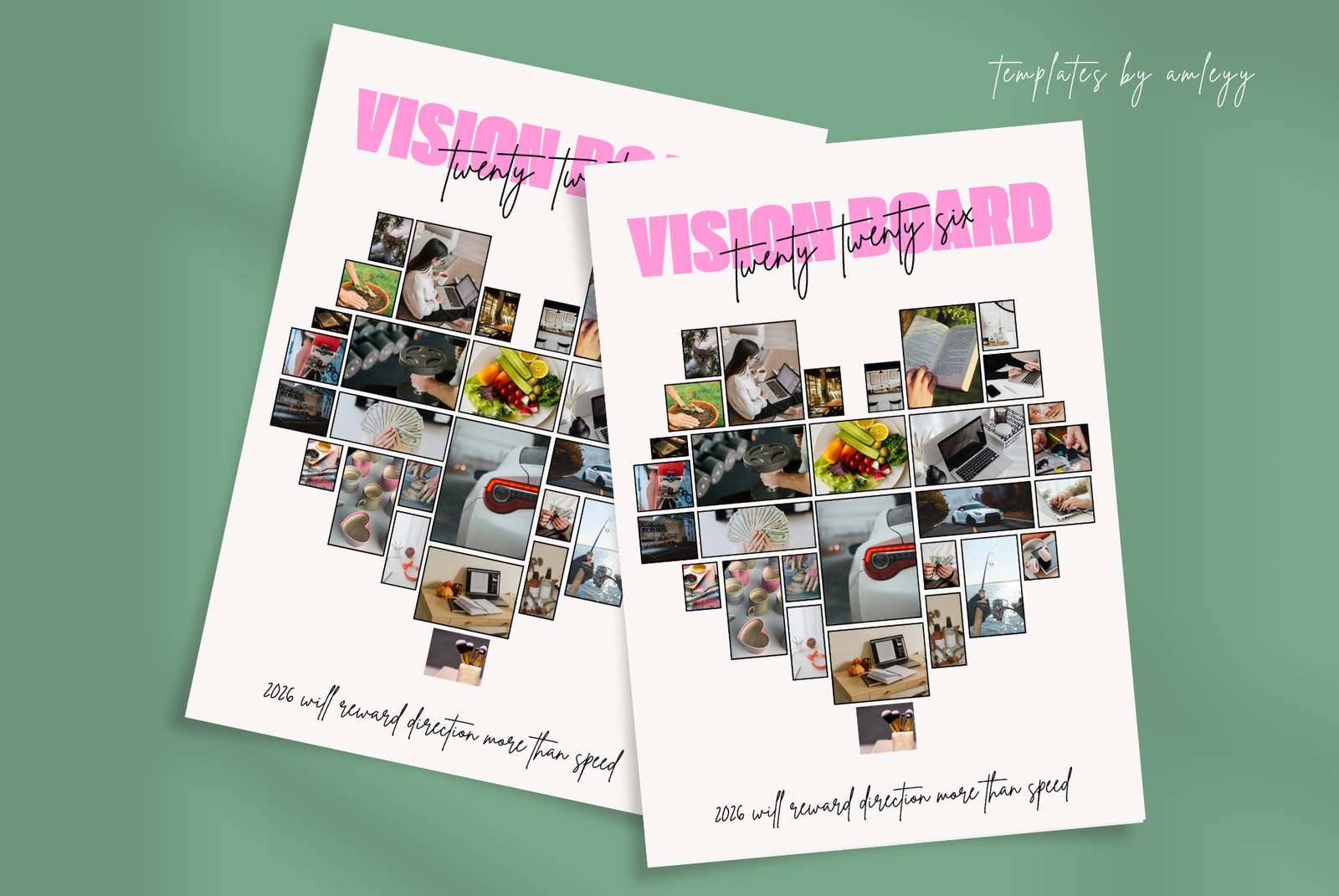
Cute Aesthetic Vision Board Template
By Templates by amleyy
A useful starting point if a blank page is slowing you down. The editable Canva layout lets you replace images, words, colors, and fonts, so the finished board can reflect your interests rather than the original example. The creator specifically includes students and teens among the intended users.
Verified contents: A PNG design and a PDF containing the Canva access link; intended for print and digital use.
How I would use it: Use it for the creative explorer example, then swap in your own hobby photos and three small action notes.
Best for a simple printable page
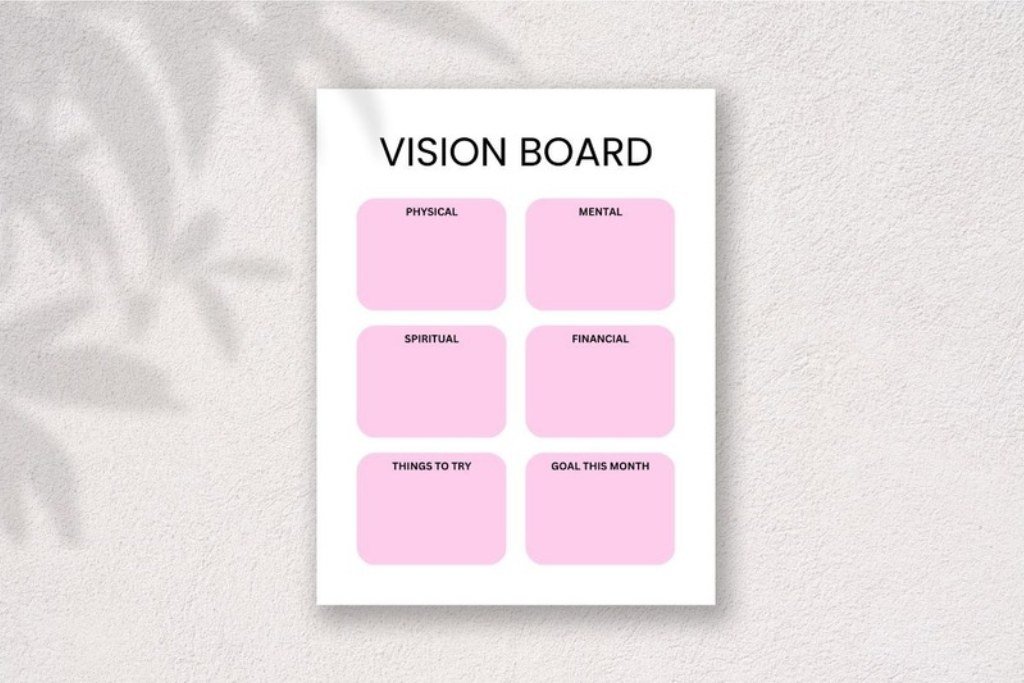
Vision Board Printable
By HillTract
A straightforward option when you want a small, structured board rather than a busy collage. The undated preview has six areas, including “Things to Try” and “Goal This Month.” Use the categories that fit your life, or adapt the headings in Canva to focus on hobbies, friendships, school, and everyday routines.
Verified contents: PDF, PNG, and an editable Canva template. The product description recommends printing on US Letter paper.
How I would use it: Choose three interests, add a picture or a few words for each, and use the monthly-goal area for one small action. Keep the remaining space open for new ideas.
Best for finishing a collage
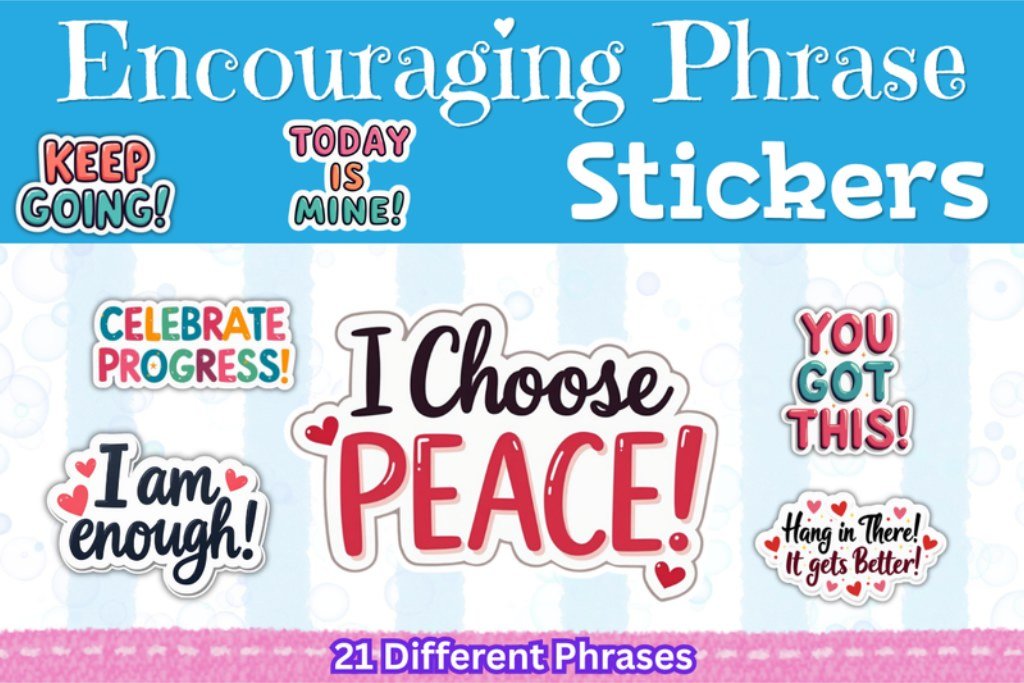
Encouraging Phrases Stickers · 21 Pack PNG
By Pixels N Bows
A practical option for adding a few supportive phrases without designing every label yourself. The white-bordered style creates the look of cutout stickers on a paper collage or digital board. Pick just a few phrases so your personal pictures remain the focus.
Verified contents: 21 individual high-resolution PNG sticker designs with white borders. These are digital files, not a shipment of physical stickers.
How I would use it: Place one phrase beside a hobby picture and another beside your “Still figuring it out” corner. Print and cut them if you are making a paper board.
Best for ready-to-print word cards
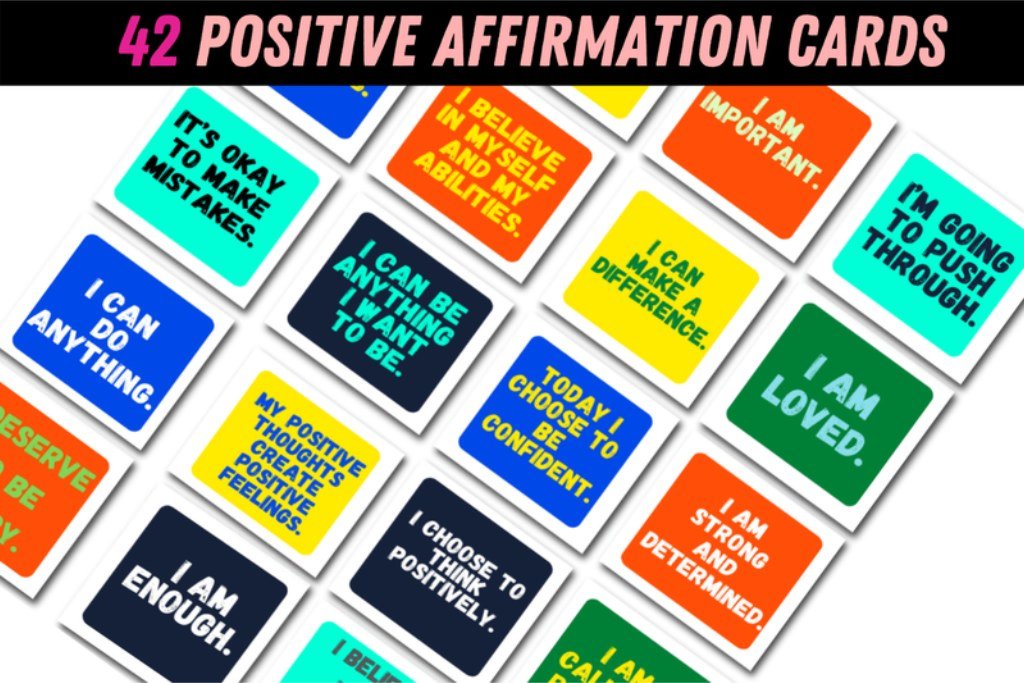
Affirmation Cards
By KY Designx
This set offers a more structured alternative to writing every phrase by hand. The creator describes the 42-card collection as suitable for children, teens, and adults. For a teen vision board, choose wording that feels believable and personal; you do not need to use the entire set.
Verified contents: 42 positive affirmation cards supplied as PDF, JPEG, and transparent PNG files; the image files are listed at 300 dpi.
How I would use it: Choose two or three cards as small visual anchors, then add a handwritten example of what the words mean to you.
Best for turning ideas into a plan
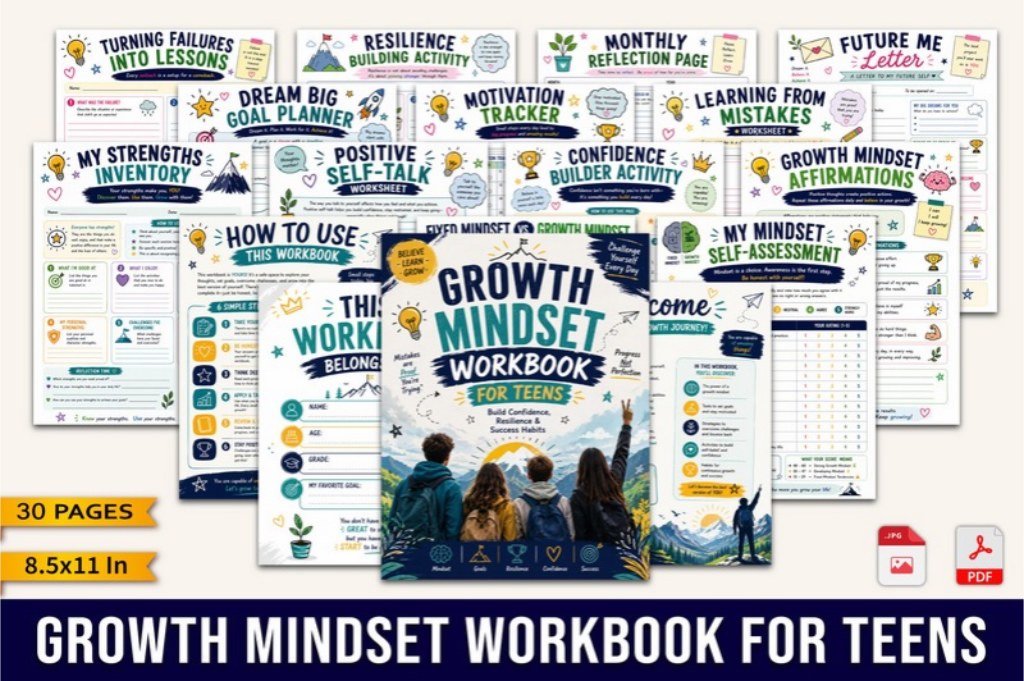
Growth Mindset Workbook for Teens
By designmela01
Choose this companion resource if you have plenty of pictures but are unsure what to do with the ideas behind them. The listed contents include goal-setting exercises, reflection, progress trackers, and vision board pages. It is a workbook rather than a collage decorating kit.
Verified contents: A 30-page PDF, sized 8.5 × 11 inches, with SMART goal setting, self-reflection activities, and vision board and dream-planning pages.
How I would use it: Work through a relevant goal page before assembling the board, then keep one progress page nearby for a short check-in.
These are digital resources. Check each product page for current access terms, file details, and any editing requirements. For younger readers, a parent or guardian can help review downloads and account requirements.
Didn't find what you were looking for?
Use the search below to explore more options on Creative Fabrica.
Prompts and words for a board that feels personal
If all you can think of is “get better at everything,” try a smaller question. Answer in ordinary language before looking for matching pictures. A sentence from your own notebook can be more useful than a quote chosen only because it looks impressive.
- What would I like to try even if I am a beginner?
- What do I enjoy that I would like more time for?
- What is one thing I want to make?
- What kind of friend do I want to be?
- Where would I like a little more independence?
- What would make an ordinary school day easier?
- Which goal is mine, and which one am I borrowing from someone else?
- What can stay undecided for now?
For short labels, try curious, create, explore, practice, steady, connect, brave, pause, learn, or begin. Pick a word you can connect to a real example. If “brave” means asking for help, write that beside it. Our vision board words and quotes guide has more options to adapt.
Keep your board useful after the making session
Try a short check-in after a couple of weeks. Ask what still interests you, what you have tried, and whether a goal needs a smaller starting point. You can move a picture, replace a phrase, or remove something that no longer feels relevant.
If a board starts to feel like a list of things you are failing to do, simplify it. Keep one enjoyable activity, one useful routine, and one possibility to explore. Rest, ordinary days, and unfinished projects do not need to be earned.
Teen vision board questions, answered
What should a teenager put on a vision board?
Start with a few interests and goals: a skill to learn, a hobby to try, friendships, a useful routine, and future possibilities. Add pictures and words that mean something to you, then write a small next step beside your main goals.
How do you make a vision board for teens without buying a kit?
Use cardboard or a notebook, your own drawings or photos, paper scraps, and handwritten words. Choose three themes, arrange a small collection of images, and add a few actions. A purchased template is optional.
Can a teen vision board be digital?
Yes. Use a digital canvas or editable template, add your own images and text, and save it in a format that suits your device. Check any app’s age and account requirements and the template’s editing requirements before starting.
What are good vision board ideas for teen boys or teen girls?
Choose by interests rather than gender. Music, sport, art, friendship, science, games, outdoor time, and future learning can belong on anyone’s board. Let the person making it choose the pictures, colors, and goals.
Does a vision board have to be about a future career?
No. It can focus on a term, a season, a hobby, or the kind of ordinary week you would like. Career ideas can be one small corner, and they can stay open-ended.
How often should teens update a vision board?
There is no fixed schedule. A brief check-in after a few weeks or at the start of a new term can help you notice what still fits. Update it whenever your interests or circumstances change; you do not have to finish every goal first.
Choose one corner and begin
For your first board, choose one thing to try, one thing to practice, and one thing that makes life feel more like yours. Give each an image and a small action. You can add the rest when it becomes clearer.
If you want help with the layout, start with the Cute Aesthetic Template. If you prefer clear sections, try the Vision Board Printable. Either way, leave enough space for your next unexpected interest.