
The next chapter studio · Career & meaningful work
Picture the work.
Make room for the steps.
A career vision board is a visual collection of the work, skills, opportunities and working conditions you want to move toward. Useful career vision board ideas include a target role, a project you want to complete, a skill to practice, people to learn from and a picture of your ideal working day. Give each image a personal caption and one practical next step.
Perhaps you want a different job. Perhaps you love your field but want more creative freedom, a kinder team or work that leaves room for the rest of your life. Your board can hold any of those ambitions. It does not need a corner office to count.
Use the ideas and seven optional templates, workbooks and printables below to build a collage with a direction you recognize. We will look at what to put on it, pictures that carry meaning, three example boards and a simple way to connect the collage to your week.
Quick Picks: choose the tool for your next step
Start with the task you want help with. These four picks cover different needs; you do not need the whole collection.
Changing direction: Career Change & New Beginnings Workbook
Building a desktop board: Editable Business Vision Board | Canva
Tracking skills and milestones: Professional Growth Goal Tracker
Making a paper collage: Vision Board Kit Printable
This article contains affiliate links. If you buy through them, we may earn a commission at no extra cost to you. The downloads below are optional tools for your own planning.
Start with the working day you want
Before looking for pictures, finish this sentence: “I want my work to include more…” Try naming the actual experience: writing, problem-solving, making things, helping customers, learning a craft or having time to think. Then finish a second sentence: “I would like less…” Your answer might involve a commute, unclear expectations or tasks that leave no room for your strengths.
These answers give your board a purpose beyond a particular job title. Two roles with the same title can involve very different teams, schedules and responsibilities.
Write a direction card.
“I want to move into a junior design role where I can build a portfolio, receive useful feedback and have a predictable schedule.” This is an example to adapt, rather than a promise or a required formula.
Choose one main direction for this version of your board: finding a role, growing in your current field, exploring a change or building independent work. Keep other possibilities on a separate page if they make the collage harder to read.
12 career vision board ideas with a next step
Choose three to five of these to begin. The picture suggestions are starting points; use your own photos, sketches and words wherever they tell your story better.
Studio card 01
1. A role you want to explore
Choose a picture of someone doing a relevant task: editing a manuscript, helping a patient, sketching a floor plan or testing an application. Add the role name in your own handwriting. A photograph of the work can tell you more than an impressive office.
Studio card 02
2. A skill you can demonstrate
Show the thing you want to learn through an object or a piece of work: a camera, a spreadsheet, a finished illustration or a few lines of a new language. Under it, name a small outcome you could actually make.
Studio card 03
3. A portfolio project you would be proud to show
Leave space for your own work. A placeholder sketch of a book cover, a small website plan or a sample lesson can represent the project before it exists. Replace the sketch with a finished detail later.
Studio card 04
4. A working environment that suits you
A busy studio, a quiet desk, an outdoor setting or a workshop can all belong. Decide what the scene represents: focus, collaboration, movement or access to equipment. Expensive furniture is optional.
Studio card 05
5. People you can learn alongside
Use a photograph of a small conversation, a workshop or a shared project to stand for connection. You do not need a wall of famous people. Think about the kind of exchange you want: practical feedback, shared learning or a thoughtful introduction.
Studio card 06
6. A chance to speak up
A microphone, a presentation slide or a meeting notebook can represent sharing an idea. Define what confidence would look like in practice: explaining your work, asking for clarification or presenting one recommendation.
Studio card 07
7. Recognition for work you actually value
Instead of collecting only awards and titles, show a finished contribution: a useful guide, an improved process or a client project. Add a caption about the quality you want your work to be known for.
Studio card 08
8. Earnings linked to a real purpose
Use a symbol for what better pay would make possible: a training course, a more manageable commute or financial breathing room. If you add a number, label whether it is an aspiration, a research question or a specific target.
Studio card 09
9. A career change with a bridge
Place an image of your current strengths beside one representing the work you want to explore. The space between them is for transferable skills, learning and a first experiment. You can be curious without pretending every decision is settled.
Studio card 10
10. Independent creative work
A product sketch, a modest shop display or a page from a client brief can represent working for yourself. Include the work behind the appealing studio: making, revising, communicating and delivering.
Studio card 11
11. Boundaries that support your working life
An evening walk, a closed laptop or a calendar with open space can represent finishing at a reasonable time. Give the image a clear caption so it carries your meaning rather than becoming another pretty photograph.
Studio card 12
12. Evidence that you have already begun
Add a small piece of your present progress: a completed lesson, a draft, a helpful comment or a photograph of something you made. Your career board can show a starting point as well as a destination.
The working shelf
7 templates, workbooks & printables for a career vision board
Some tools help you arrange the pictures; others help you work through the decisions behind them. We selected these for distinct uses: a career change, a desktop collage, ongoing planning, skills, creative work, reflection and a physical board.
These are digital products, not finished physical planners. Check the product page for current access options and included files. Canva editing is confirmed only for the items described as Canva templates below.
Best for a career change
1. Career Change & New Beginnings Workbook
By KDP Mount
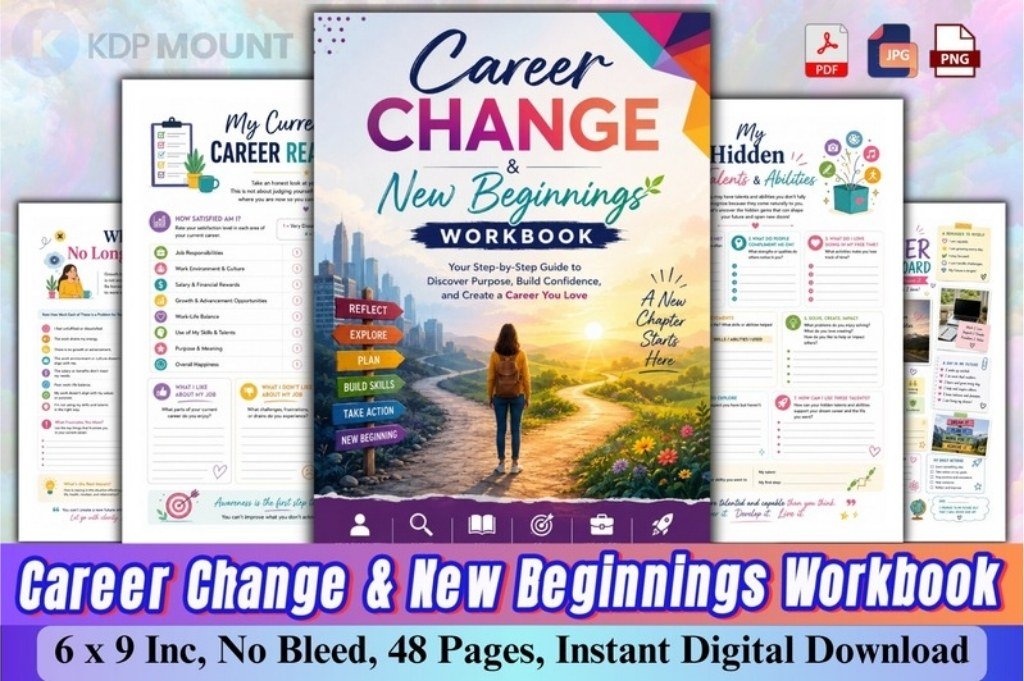
A strong match when your collage is about changing direction rather than decorating a desk. The workbook includes a career vision board page alongside transferable-skills exercises, career comparisons, a skill-gap analysis and transition planning. It gives you somewhere to test the choices behind the pictures.
What is included: 48-page PDF · 6 × 9 inches · no bleed
Best for a desktop career collage
2. Editable Business Vision Board | Canva
By Sharp Flair Graphics
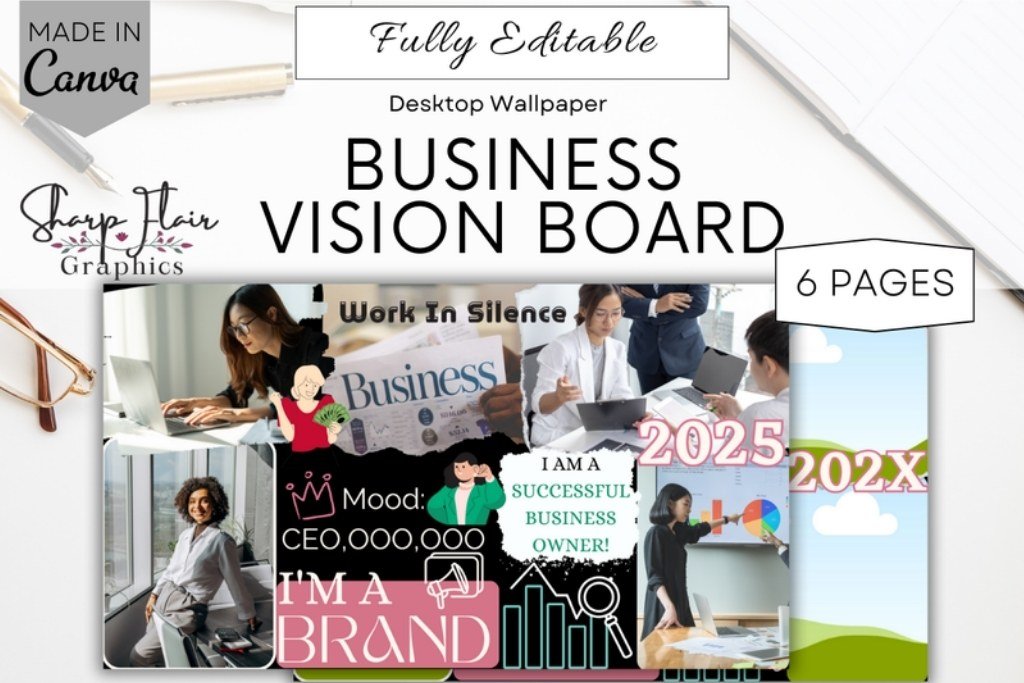
The most direct visual option in this selection: an editable business vision board designed at desktop size. It includes a sample board, a blank template, two pages of reflection questions and two rough-work pages. It suits freelance or business ambitions; adapt the prompts and images to the work you actually want to do.
What is included: Editable Canva template · 1920 × 1080 desktop board · reflection and rough-work pages
Best all-in-one planning companion
3. Career Compass Planner Canva
By Heartcraft Studio
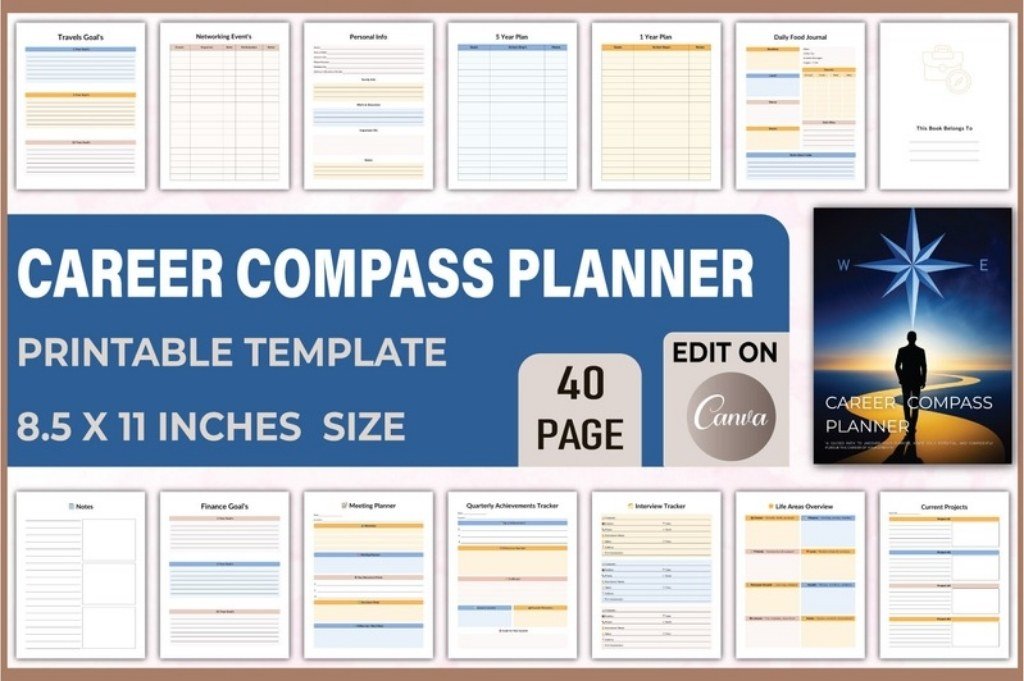
Choose this if you want the career collage to sit beside a broader planning routine. The listing describes job-search tracking, professional networks, skills and achievements, with monthly, weekly and daily planning. It also includes life-balance and reflection sections, so you can keep the working day in view as well as the job title.
What is included: 40 page layouts · editable Canva link · PDF, JPG and PNG · US Letter
Best for skills and milestones
4. Professional Growth Goal Tracker
By The Grateful Studio
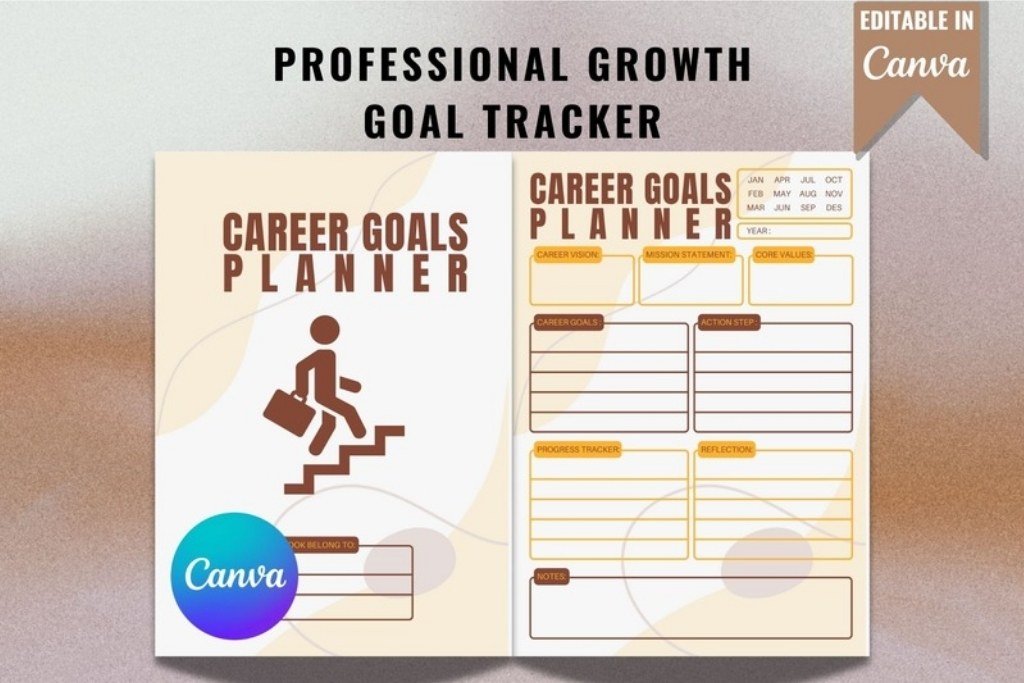
A focused option for the skill-building side of a career vision board. The editable Canva template includes sections for skills, growth and achievements, with career milestones and objectives. It is a useful companion when a general picture of success needs a clearer record of what you are practicing and completing.
What is included: Editable Canva template · sections for skills, growth and achievements · digital download
Best for creative projects
5. Creative Work Planner
By The Grateful Studio
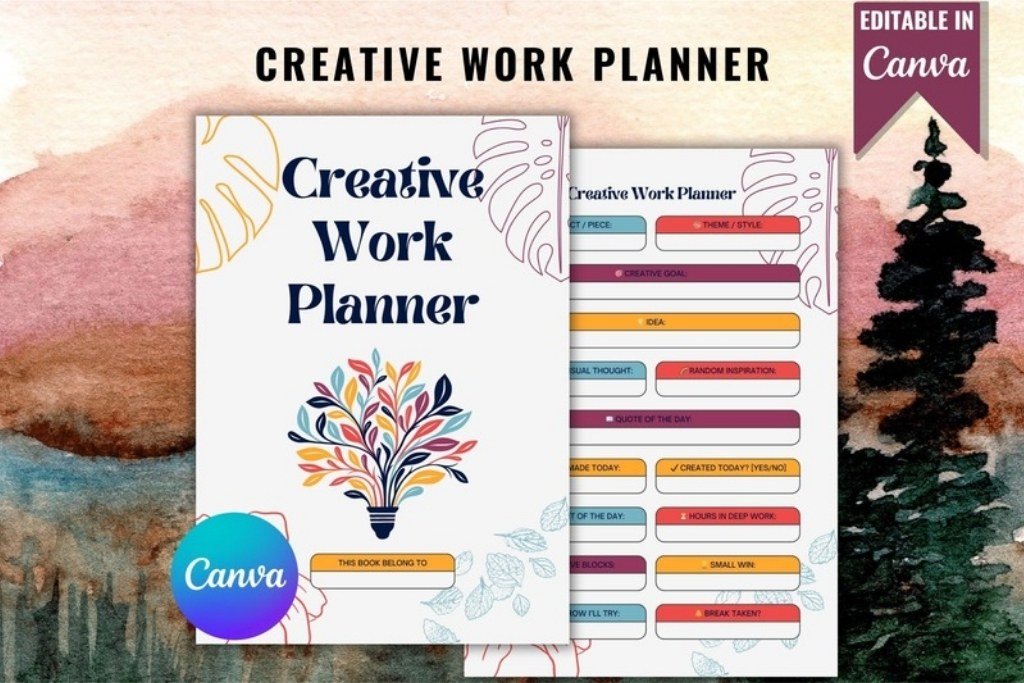
For an illustrator, designer or freelance creator, a finished project may be a more useful target than a new title. This one-page Canva planner is designed for creative tasks, ideas, projects and timelines. Its compact format makes it a practical working sheet beside a more visual collage.
What is included: One-page layout · editable Canva template · SVG format also listed
Best for a compact career planning set
6. Career Development Planner
By Kdp Vibe
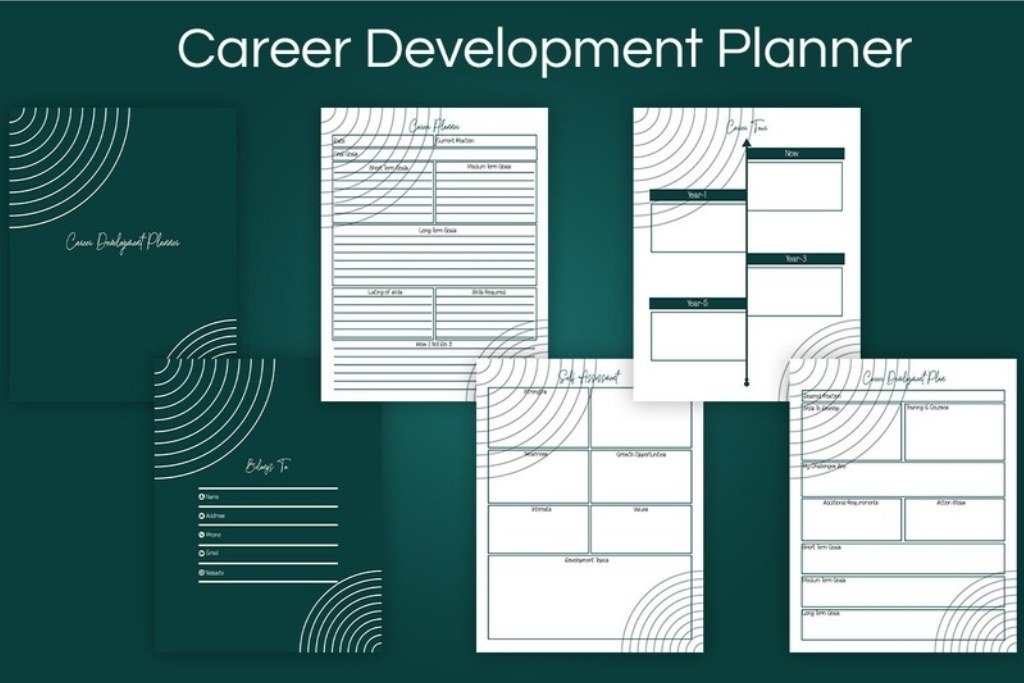
A smaller option for readers who prefer a compact set of career-planning pages to a large workbook. The listing includes six high-resolution JPEG pages as well as PDF, AI and SVG files. Choose this for a short planning session beside your collage; Canva editing is not listed for this product.
What is included: PDF, AI and SVG files · 6 high-resolution JPEG pages · 300 DPI
Best for a paper collage
7. Vision Board Kit Printable
By Digital Emporium
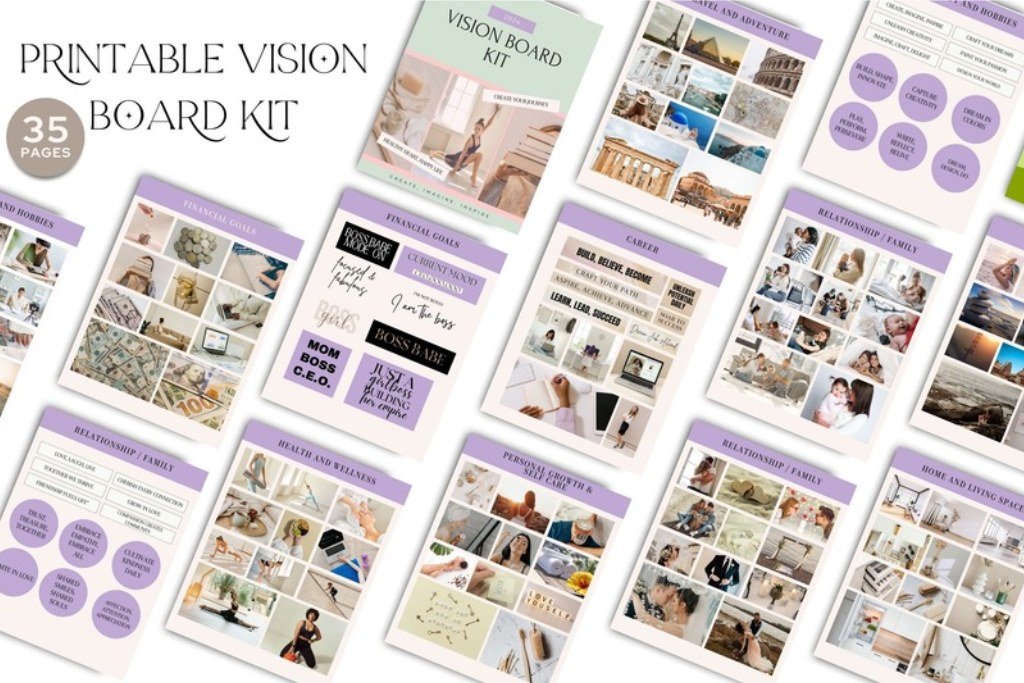
For a physical career collage, this printable kit supplies a broader pool of ready-to-print vision board elements. It is a 35-page PDF, so you can select a few relevant pieces and add your own career photographs, project samples and captions. It is a general vision board kit rather than a dedicated career workbook.
What is included: 35-page printable PDF · cut-and-arrange vision board elements
Career vision board pictures that mean something
When choosing career vision board images, ask, “What part of this picture do I want in my working life?” A city skyline might mean relocation, an international team or simply a shorter journey to work. Write the answer beside it. Without that caption, it is easy to borrow someone else’s idea of success.
Collect a mix of three kinds of image: the work you want to do, the conditions you want to work in and the process that could help you move forward. For a writing career, that might be a published page, a quiet workspace and an editing notebook.
Your own photographs make the board personal: a project on your desk, a notebook from a class or a place where you do your best thinking. For a board you plan to post online, use images you own or have permission to share. Avoid visible client information, application details and private messages.
Words to put on a career vision board
Choose a few short phrases that sound like your own intentions. Try Make good work, Practice the skill, Ask a better question, Build a portfolio, Work with care or Leave room for life. These are original wording ideas you can adapt.
If “dream job” feels too distant, use a closer phrase such as “a role worth exploring” or “more of the work I enjoy.” The board can help you define a question before you know the answer.
Three career vision board examples to make your own
These are fictional examples of how the pieces could work together. Use the structure, then change the goals and pictures to fit your circumstances.
01 / The career changer
Direction: Explore moving from customer support into user research.
Pictures: A conversation notebook, an example research report and a small collaborative workshop. Words: “Listen carefully. Ask clearly.”
Action card: Compare three role descriptions, identify relevant experience from the current job and speak with someone who does this work. Any sample research project should respect participant consent and privacy.
02 / The creative freelancer
Direction: Develop a focused illustration offer for small businesses.
Pictures: Two original drawings, a mock client brief and a tidy project folder. Words: “A clear offer. Work I can show.”
Action card: Finish one portfolio case study, explain the deliverables and ask a suitable prospective customer what they need. The board focuses on testing an offer rather than assuming a particular income.
03 / The professional who wants to grow
Direction: Take more responsibility in a current role while keeping a manageable workload.
Pictures: A presentation, a finished team project and a calendar with protected focus time. Words: “Contribute clearly. Keep learning.”
Action card: Record recent contributions and ask a manager what skills and evidence would be relevant to the next level. Include a question about priorities and capacity.
For a broader collage covering home, relationships and other priorities, see our 50 ideas for what to put on a vision board. Keep this career version focused on work.
Choose a career board layout you will want to revisit
The three-column board: direction, skills, next steps
Put your main career intention on the left, the skills and experiences you want in the middle and a few removable action notes on the right. This works well when your ideas need some order. Give each column one anchor image, then add smaller details.
The central project board
Place one project or role in the center. Surround it with pictures of the people, skills, working conditions and completed work connected to it. Leave space at the bottom for “This week.” This layout suits a focused goal such as completing a portfolio.
The private journal spread
Use the left page for images and words and the right page for questions, constraints and next steps. A closed notebook is useful if your plans involve a confidential job search or personal financial details. Our vision board journals and planners article explores formats for keeping pictures and planning together.
For a digital version, start with a simple document or collage canvas that you can edit. If you prefer an editable layout, browse our Canva vision board template picks. Choose the size for where you will view it, and check text at that actual size before exporting.
Turn the collage into your next 30 days
A career vision board is a creative planning aid. It cannot guarantee a job offer, promotion or earnings. Pair the picture of an outcome with something you can do, then keep the plan small enough to revisit.
CareerOneStop’s career goal-setting guidance recommends writing specific steps, setting dates and keeping goals relevant and achievable. The outline below is our suggested way to connect that kind of planning to your collage.
- First week: make the goal clearer. Choose one direction card. Research a role or project and write down what you still need to learn. Remove images that no longer fit what you discover.
- Second week: make one piece of evidence. Complete a practice task, revise a work sample or document a project you have already done. Choose a task that fits your available time and resources.
- Third week: invite useful feedback. Ask a focused question of an appropriate peer, mentor or career adviser. For example: “Does this sample show the skill I am trying to demonstrate?”
- Fourth week: review and choose again. Note what you completed, what got in the way and what you want to try next. Adjust the goal or timing when your information or circumstances change.
Keep only one current action card on the board if a long list becomes distracting. An intention such as “build my portfolio” becomes easier to begin when the card says “draft the introduction to one case study on Saturday.”
When the board stops feeling relevant
Check whether the goal is still yours, whether the next step is clear and whether the timing fits your life. A change in direction is information you can use. Replace the picture or shorten the task rather than keeping an outdated ambition on display.
Career vision board FAQ
What should I put on a career vision board?
Include a role or kind of work you want to explore, relevant skills, a project, preferred working conditions and people or resources you can learn from. Choose a few priorities and give each picture a caption and a next step.
How do I make a career vision board if I do not know my dream job?
Start with tasks, interests and working conditions instead of a title. Show what you want to try, what you enjoy doing and the questions you want to investigate. Your first action could be comparing a few roles or speaking to someone about their work.
Can I make a career vision board in Canva?
Yes. You can arrange your own pictures, text and shapes on a canvas, or use a template you are entitled to use. Keep captions readable and export for your intended screen or print size. A private file is useful when your career plans are confidential.
Should my board include salary goals?
It can, if pay is relevant to your priorities. Label the amount as a goal or a research question and check comparable roles before treating it as realistic. You can use a private note or a symbol instead of displaying a personal figure.
How often should I update a career vision board?
Use a schedule that helps you act. A brief weekly check can keep the current task visible, while a monthly review gives you a chance to change pictures, questions and priorities. Update sooner if you learn something that changes your direction.
Is a career vision board the same as a career plan?
They serve different purposes. The board gives your direction a visual form; a career plan records actions, resources and timing. You can combine them by adding a small action card to the collage and keeping the detailed plan in a notebook.
Begin with one piece of work you care about
Choose a picture of work you would like to do, write why it matters and add one step you can take with the time and resources you have. Let those three pieces set the direction before you fill the rest of the board.
If you are ready to assemble the collage, our step-by-step vision board guide covers supplies and arrangement. For ready-made paper elements, explore the vision board printables collection and choose only the pieces that support your own idea.