Your next chapter · A picture at a time
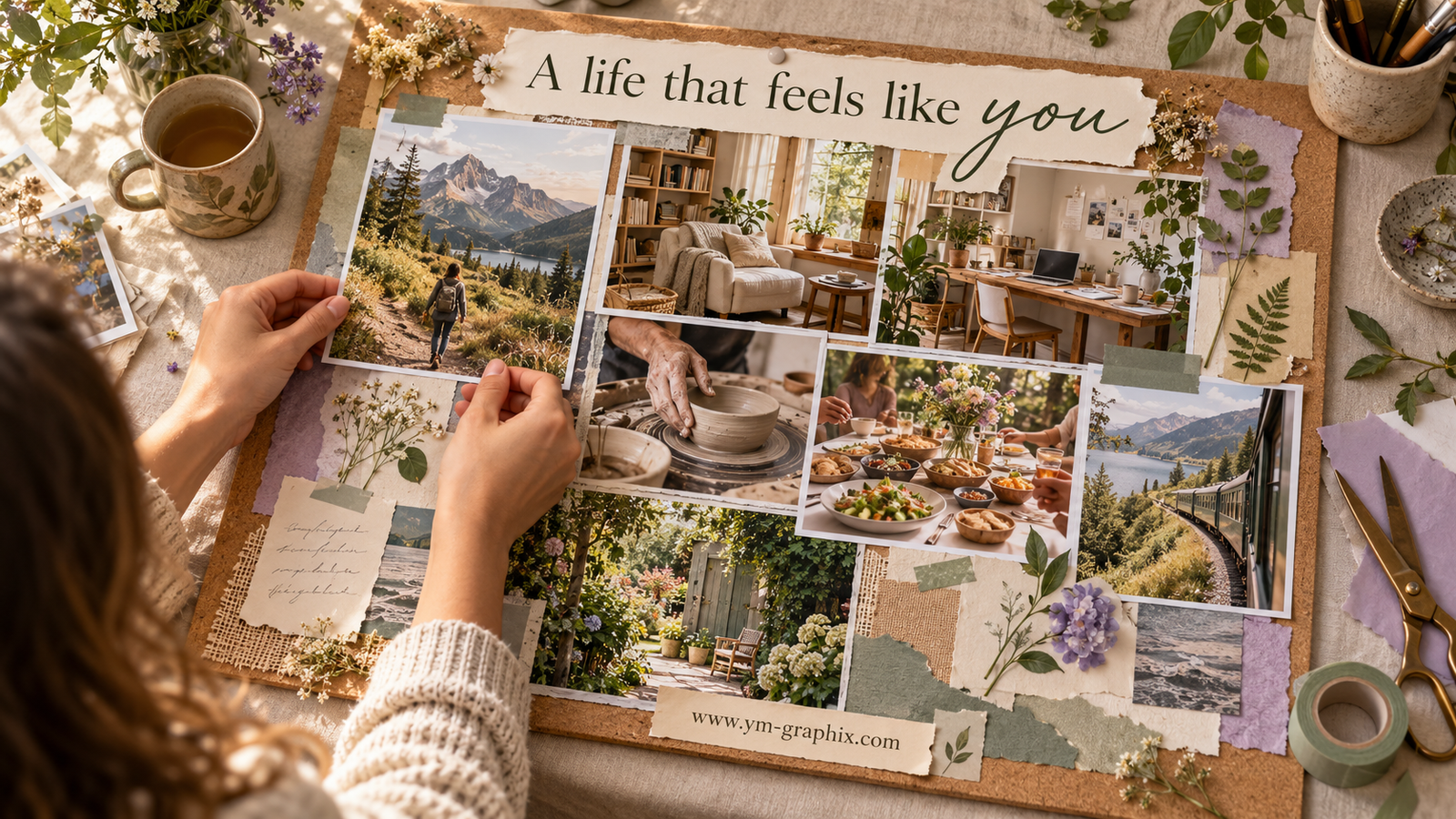
Make room for a life that feels like you.
Put pictures, words and symbols on your vision board that represent goals you care about: work, learning, home, well-being, money, relationships, travel, creativity, values or community. Add a short caption to explain what each image means to you. You can also include something you want to keep in your life, not just something you want to change.
A lovely photograph can catch your eye without describing your dream. The useful question is, “What would this look like in my own life?” A sunlit kitchen might mean cooking with friends. A mountain might mean a local walk. A beautiful desk might mean an hour to work without interruption.
Use these 50 things to put on a vision board as a menu. Pick the ideas that fit your priorities and leave the rest. You do not need all ten categories on one board.
How to choose what belongs on your board
Before collecting pictures, write three short answers: What do I want more of? What would make an ordinary day better? What matters enough for me to give it time? Those answers will help you recognize the right images.
When an image looks beautiful but has no personal meaning, save it for a separate mood board. For this project, choose pictures you can explain in a sentence: “This represents…” or “I want more time for…”.
Need help with supplies, arranging the collage or making a digital version? Our step-by-step guide to making a vision board covers the building process. Here, we will focus on what to include.
50 vision board ideas, organized by category
Category 01 · Ideas 1–5
Career & meaningful work
Choose images of the work you want to do and the working day you want to have.
- A workspace that supports your dayUse a photo of a light-filled desk, a shared studio or a tidy workbench. Add “Room to focus” if the real goal is a better working environment.
- A project you would love to finishChoose a book cover sketch, a website mockup or a picture of something you want to build. Name the actual project so the image represents your own work.
- A skill you want to practiceA camera, a sewing machine or a short piece of code can stand for a skill. Pair it with a small practice target, such as “One photo walk each week.”
- A working relationship you valueA picture of people making something together can represent collaboration, mentoring or finding a supportive team. Write the quality you want: “Clear communication” or “Learn together.”
- The end of your working dayUse a closed notebook, a coat by the door or an evening walk. “Finish with time for dinner” gives work-life boundaries a visible place on the board.
Category 02 · Ideas 6–10
Learning & personal growth
Think about what you would enjoy understanding, trying or getting better at.
- A small reading stackPhotograph a few books you actually want to read. Add a phrase such as “Ten quiet pages” to connect the bigger reading goal with an ordinary evening.
- A class you are curious aboutUse an image of a pottery wheel, a language notebook or a local workshop. A handwritten class name makes the idea more specific than a generic graduation cap.
- A conversation in another languageChoose a café menu, a postcard or a speech-bubble sketch. Let it represent an experience you want, such as ordering a meal or talking with a relative.
- A moment of speaking upA microphone, a meeting notebook or your own written question can represent confidence in a particular setting. Try “Share one idea” instead of demanding constant confidence.
- A reminder that you can be a beginnerAdd an unfinished sketch or a slightly uneven handmade object. A phrase like “Practice counts” makes room for learning before you can produce polished results.
Category 03 · Ideas 11–15
Home & everyday spaces
You can picture a different way to use your home without planning a complete renovation.
- A corner for reading or restingChoose an armchair, a window seat or a cushion beside a lamp. Add “A place to pause” if comfort matters more than owning a particular piece of furniture.
- One clear surfaceA photograph of an uncluttered shelf or kitchen counter can stand for a manageable organizing goal. Label the specific spot you would like to make easier to use.
- A table ready for a shared mealUse a simple table setting, a favorite family recipe or your own photo from dinner. Let it represent how you want to spend time at home.
- A little green spaceA balcony herb pot, a windowsill plant or a small garden bed can represent growing something. Choose a scale that fits your space and the care you can give.
- A home project with a clear finishAdd a paint swatch, a sketch of a room or a picture of repaired furniture. Write the project name, such as “Refresh the hallway,” rather than “Perfect house.”
Category 04 · Ideas 16–20
Well-being & gentler routines
Use this category for everyday experiences you want to make room for.
- Movement you enjoyA pair of walking shoes, a bicycle or a dance studio can represent an activity you like. Choose the experience you want rather than a comparison photo of someone else’s body.
- A quieter eveningUse a bedside lamp, a book or a phone resting outside the bedroom. Add “An easier wind-down” if you want to experiment with a calmer evening routine.
- Food you would like to makeA bowl of soup, a market basket or a handwritten recipe can stand for enjoying cooking. Name one meal you would love to learn rather than creating a strict food rule.
- Time outsideChoose a nearby path, a park bench or a familiar beach. A local photograph can make this goal feel closer than a dramatic destination you rarely get to visit.
- Unscheduled breathing roomA blank diary square, a hammock or a cup beside an open window can symbolize time with no task attached. Write “Leave some space” if your board needs that reminder.
Category 05 · Ideas 21–25
Money goals & practical choices
Choose symbols that clarify a goal without putting private financial details on display.
- A named savings goalUse a picture of the thing or experience you want to save for: a course, a trip or a replacement laptop. Give it a short label so the purpose stays clear.
- A small buffer for unexpected costsAn envelope illustration or a simple cushion sketch can represent building a buffer. Keep personal amounts in a private planner if your board is visible to other people.
- A purchase you want to consider carefullyAdd a photo of a useful item you have been thinking about. “Save, compare, decide” can help the image represent an intentional choice rather than an instruction to buy immediately.
- Using what you already haveChoose repaired clothing, a library card or a well-loved tool. A vision board can include making existing belongings useful, especially when that supports a goal you care about.
- A regular money check-inA notebook and a calendar dot can stand for making time to review your own plans. Keep the reminder simple; account details and sensitive documents do not need to be part of the collage.
Category 06 · Ideas 26–30
Relationships & belonging
Focus on shared experiences and the way you want to show up for people.
- A regular meal with someone you loveUse your own dinner photo or a picture of two cups on a table. A label such as “Sunday lunch together” turns a warm image into a recognizable intention.
- A friendship ritualAdd a cinema ticket, a walking-route sketch or a photo from a coffee date. Choose something you could repeat, such as a monthly catch-up or a short weekly call.
- A place to meet new peopleA community garden, a craft group or a book-club circle can represent belonging. Name an activity you would enjoy even before you know who else will be there.
- More attentive time togetherA board game, a picnic blanket or a pair of phones put away can symbolize being present. Write a shared experience you want rather than trying to script another person’s behavior.
- A tradition you want to keepUse a family recipe, a handwritten greeting or a photo from a meaningful celebration. Keeping something good in your life belongs on a future-focused board too.
Category 07 · Ideas 31–35
Travel & small adventures
There is room for nearby discoveries as well as a long-planned trip.
- One destination with a personal reasonChoose a place you want to visit and add why it matters: a landscape, a language or a person you hope to see. The reason helps you choose between attractive pictures.
- A local day tripA museum postcard, a train map or a nearby town square can represent a small adventure. Add the place name so the idea does not disappear into a generic travel collage.
- An experience you want to tryUse a kayak, a cooking class or a night-sky photograph. Let the activity lead the picture choice if the experience matters more than a particular destination.
- The feeling of a slower tripA train window, a café terrace or a quiet lane can represent the pace you want. “One place, more time” is a useful caption for a less crowded itinerary.
- A memory you would like to make againAdd your own photo of a picnic, a campsite or a familiar seaside walk. A future goal can be returning to something simple that already brings you joy.
Category 08 · Ideas 36–40
Creativity & things to make
Give unfinished ideas somewhere to live before they become completed projects.
- A creative practice in progressUse a sketchbook page, a knitting basket or paint-stained brushes. A picture of the process can represent making time to create, even when nothing is ready to show yet.
- A finished piece you want to makeChoose a handmade bowl, a stitched bag or a small photo series. Write your version of the project so you have a direction without needing to copy someone else’s work.
- A place for your materialsA small supply tray or a shelf of neatly stored tools can represent making creativity easier to begin. Match the picture to the amount of space you actually have.
- An opportunity to share your workA little exhibition wall, a portfolio page or a gift tag can stand for showing something you made. Choose an audience or occasion that feels meaningful to you.
- Permission to experimentAdd a surprising color combination, a loose doodle or a scrap you cannot quite explain yet. “Try it and see” can make space for playful work without a fixed outcome.
Category 09 · Ideas 41–45
Values & the way you want life to feel
Words and symbols can hold ideas that are difficult to capture in a single photograph.
- A word for your current seasonTry “Steady,” “Curious,” “Connected” or a word of your own. Choose one that helps you make a decision, then place it where you can easily read it.
- A phrase in your own voiceWrite a short sentence you would say to a friend, such as “Make room for what matters.” Handwriting can make the message feel more personal than a polished quote card.
- A symbol of a valueA bridge might represent connection; a tree might stand for patience. Add a tiny caption if the meaning would otherwise be easy to forget.
- A picture of an ordinary good dayUse a slow breakfast, a bike beside the door or a tidy place to work. This image can remind you what you want daily life to feel like between big milestones.
- Something you want to keepChoose a photograph or a word representing a routine, relationship or place you already value. A board can hold continuity alongside change.
Category 10 · Ideas 46–50
Community & giving back
Choose ways to contribute that fit your interests, time and circumstances.
- A cause you care aboutUse a simple symbol or a photograph you have permission to use. Add a short phrase explaining the connection so it represents your values rather than a decorative badge.
- A skill you could shareA sewing kit, a music stand or a computer lesson can represent helping someone learn. Think of a specific skill you would enjoy passing on.
- A place you want to care forA local park, a shared garden or your street can stand for practical community involvement. A photo of somewhere familiar keeps the idea connected to your own surroundings.
- A small act of generosityA handwritten card, a meal container or a stack of donated books can symbolize a contribution. Choose something that feels possible within your current resources.
- A shared projectA mural sketch, a seed tray or a neighborhood noticeboard can represent making something with other people. Add the kind of project you would enjoy joining or starting.
What words and pictures work well together?
The picture carries the feeling; a few words explain your meaning. Instead of adding a quote simply to fill a gap, use a phrase that helps you understand why you chose the image.
- A train-window photograph: “Take the slower route.”
- An open sketchbook: “Make something on Sunday.”
- Two mugs on a table: “Keep in touch.”
- A clear desk: “Space for one thing at a time.”
- A balcony herb pot: “Grow a little.”
Your own snapshots, sketches, postcards and magazine cutouts can sit alongside printed words. For downloadable materials, our vision board printables guide offers options to browse. You can also write and draw everything by hand.
If you want to share the finished collage online, use images you own or have permission to use for that purpose. Finding a picture in a search result does not by itself give permission to reuse it.
Make the ideas your own
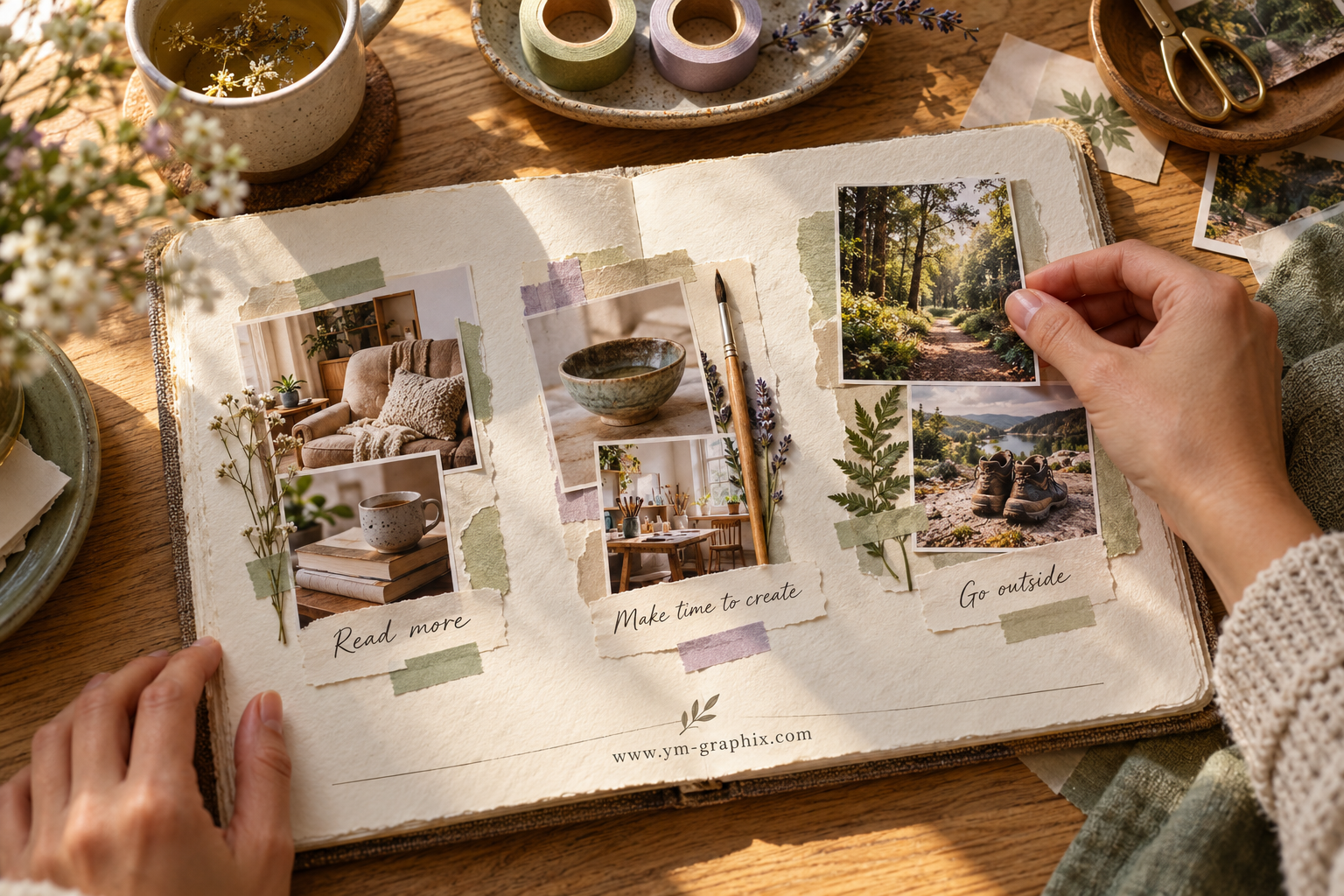
Three small vision board examples
Each example combines a few ideas from the list. You can mix categories, keep a single theme or use one cluster as a journal spread.
A calmer, more creative everyday life
Choose: A reading chair, an open sketchbook and a photograph of a nearby trail.
Add words: “Read more,” “Make time to create” and “Go outside.”
Keep one next step nearby: Put a book beside the chair, set out your drawing tools or choose a short walking route. Begin with whichever one feels easiest this week.
A new direction at work
Choose: A project you want to complete, a symbol of a skill you want to learn and an image of a working day that suits you.
Add words: “Work I care about” or a more specific phrase in your own voice.
Keep one next step nearby: Draft one portfolio page, find a class to investigate or write down a question for someone who works in the field.
A season of connection and small adventures
Choose: A shared meal, a nearby town you want to visit and a photo from a favorite day with friends.
Add words: “Make plans together” and “Explore close to home.”
Keep one next step nearby: Suggest one date or choose a place to look into. You can leave room for the details to change.
Prefer to keep these ideas private or add reflections as you go? A vision board journal or planner gives your pictures and notes somewhere to stay together.
How to keep the collage personal and readable
Give your most important idea a little more space. Group related pictures so their meaning is easy to see, and use a few repeated colors to bring different materials together. You can mix polished photographs with handwriting, ticket stubs and rough sketches.
Crop a picture when only one detail matters. Keep captions short enough to read at the size you will use the board. If two pictures say the same thing, try keeping the one that feels more personal.
For a digital layout, our Canva vision board templates guide explores starting points. For small labels and finishing details, browse our vision board stickers and printable elements. Choose the main ideas before the decoration.
What not to put on a vision board
Set aside pictures chosen only because they look impressive, goals that belong to somebody else and text that makes you feel constantly behind. You can admire a luxury house without wanting the work or expense that comes with it.
Avoid filling every space with a different demand. Keep detailed to-do lists in a planner, and let the board show the priorities those tasks serve. Private information can stay in a closed notebook or a personal digital file.
Questions about what to put on a vision board
What should a beginner put on a vision board?
Begin with a few priorities, pictures that represent them and short captions explaining their meaning. For example, a library photo, the words “Read for pleasure” and a note to choose your next book can form one small cluster.
What are the main vision board categories?
Common categories include career, learning, home, well-being, money, relationships, travel, creativity, personal values and community. These are optional prompts. Choose the areas that matter to you, or make a board about one subject.
How many things should I put on a vision board?
There is no required number. Start with a few meaningful images and words, then check whether you can still recognize your main priorities at a glance. Fifty ideas give you choices; they do not all need to go on your board.
Can I put words on a vision board instead of pictures?
Yes. Use handwritten goals, short quotes, meaningful words, drawings or simple symbols. A phrase such as “More evenings outside” can be enough when it gives you a clear direction.
Can I include goals that seem far away?
Yes. You can include a long-term ambition and a smaller step you can take now. A dream destination might sit beside the name of a place you want to research. You do not need to solve the entire goal on the board.
Does a vision board have to be about money and success?
No. Rest, friendship, learning, a calmer space, creative time and keeping a routine you love can all belong. Choose what you want your life to contain rather than copying someone else’s definition of success.
Should I put a date or a year on my vision board?
Only if a time frame helps you choose your priorities. You can make a board for a season, a project or an open-ended next chapter. Keep deadlines realistic and flexible when circumstances may change.
What should I leave off my vision board?
Leave off goals you do not personally want, duplicate images that crowd out your priorities and private details you do not want visible. You can keep sensitive goals in a closed journal or a private digital version.
A small place to begin
Choose three things you want to make room for
Pick one idea for your everyday life, one for something you would like to try and one for something you want to keep. Find a picture or write a few words for each.
Before adding more, ask what each piece means to you. A board with a few recognizable priorities gives you somewhere to start. You can change it as your life changes.