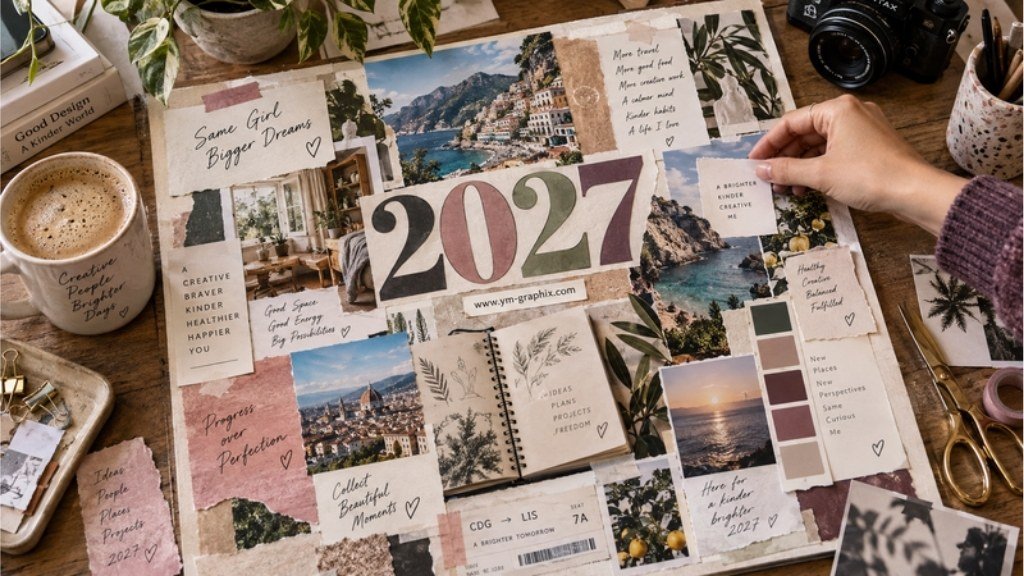
A Vision Board 2027 is a visual story of how you want the year to feel, look, and unfold. It can combine personal photos, magazine cutouts, handwritten notes, typography, color, paper textures, and small reminders of the experiences you want to create.
Think less about making a perfect poster and more about building a collage that feels recognizably yours: the light in a future room, a train ticket tucked beneath a photograph, a word written in your own handwriting, or a tiny next step clipped beside a much bigger dream.
What is a Vision Board 2027?
A Vision Board 2027 is a collection of images, words, colors, and visual details that represent the direction you want your life to take during 2027. Some boards focus on concrete goals. Others capture a mood, a lifestyle, a creative identity, or a mix of experiences that would make the year feel meaningful.
You can make one on poster board, inside a journal, on a pinboard, or digitally. The format matters less than the choices you make. A useful board does not simply display attractive pictures. It connects those pictures to places, habits, projects, relationships, and experiences that matter to you.
Start with the story you want 2027 to tell
Before opening Pinterest or cutting into a magazine, decide what kind of year you are trying to picture. A clear emotional direction makes it easier to recognize the right images later.
Calm, adventurous, focused, playful, spacious, connected?
Time outside, creative work, travel, confidence, rest, friendship?
Picture the morning, the room, the pace, and the small details.
Micro-tip: include at least one image of an everyday moment. A board filled only with dramatic milestones can feel distant; a sunlit breakfast table or an open sketchbook makes the future easier to imagine as real life.
Choose your 2027 vision board aesthetic
An aesthetic is more than a color palette. It is the visual language that holds unrelated goals together. The best direction is the one that matches the life you want to move toward, not simply the trendiest collage on your feed.
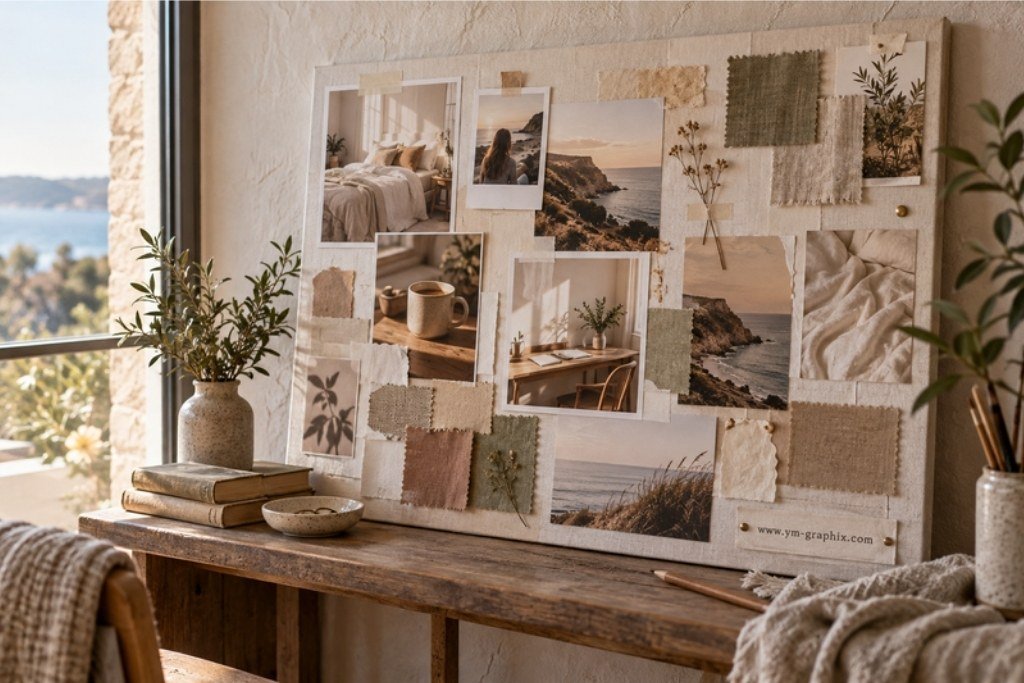
1. Warm Neutral Reset
Build the board around cream paper, warm beige, soft brown, linen textures, wood, and muted photography. Picture a slow morning, a simple desk, books with worn spines, a calm bedroom, and sunlight moving across the floor.
Picture ideas: a ceramic cup, a natural-fabric swatch, an uncluttered workspace, a quiet landscape, a handwritten routine, and one personal photograph that already carries the feeling you want.
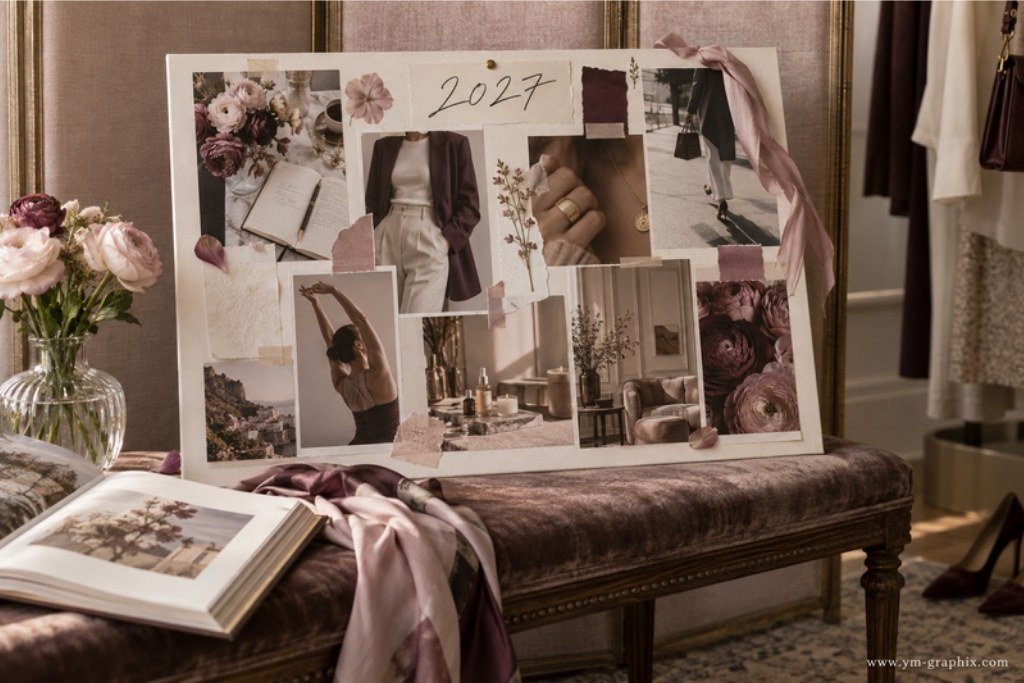
2. Soft Feminine Growth
Use dusty pink, muted plum, ivory, floral details, graceful type, and tactile fabrics. Keep the composition grown-up by balancing delicate elements with clean spacing and a few darker accents.
Picture ideas: fresh flowers beside an open notebook, a favorite outfit, beauty details, a gentle movement practice, an elegant interior, and small notes about confidence, boundaries, and self-care.
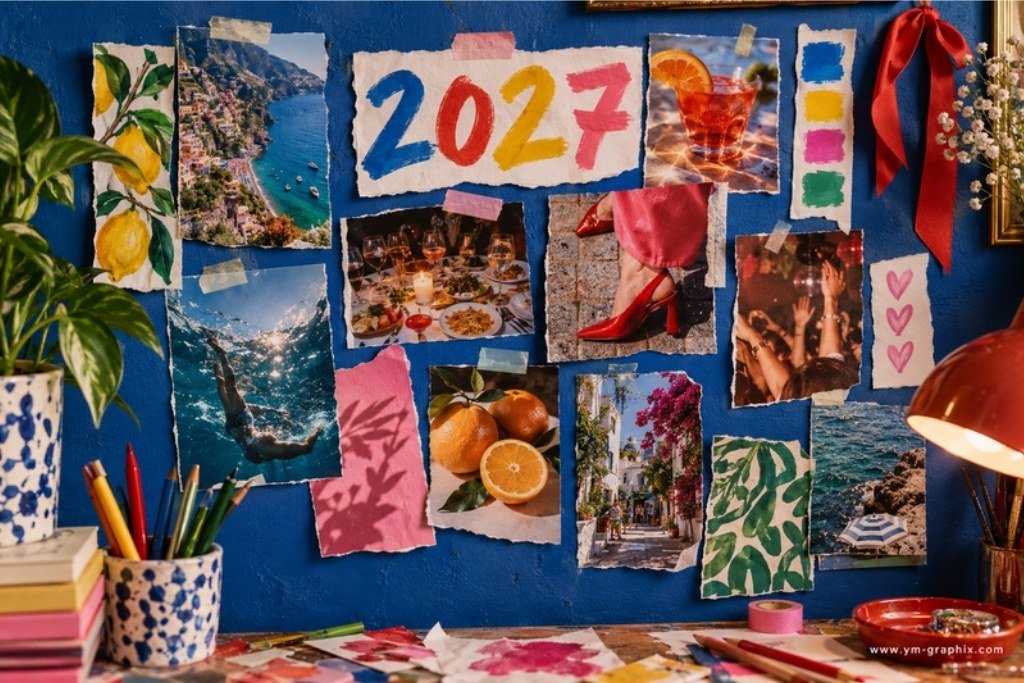
3. Colorful Dopamine Year
Let color do the storytelling. Mix cobalt blue, tomato red, citrus yellow, bright green, and playful pink with energetic type and imperfect cut-paper shapes. The result should feel collected, not color-coded.
Picture ideas: concert tickets, shared meals, bold clothing, street photography, art supplies, joyful movement, weekend travel, and the kind of candid photograph that instantly changes your mood.
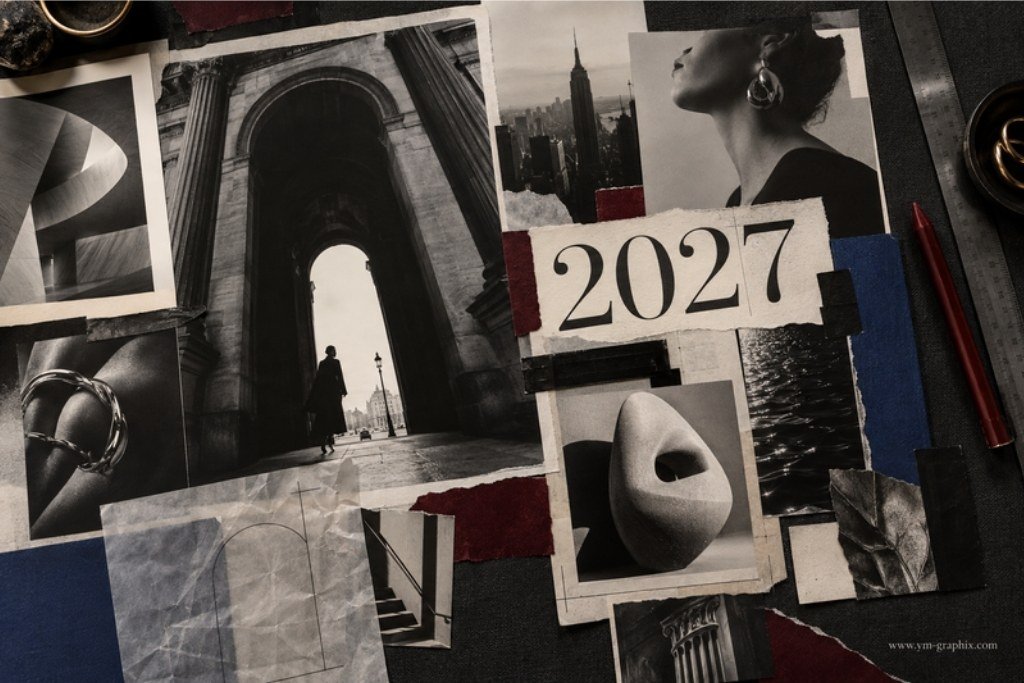
4. Editorial Magazine Collage
Combine oversized serif headlines, black-and-white photography, architectural shapes, sharp crops, and a few restrained color accents. Allow one image or phrase to dominate instead of making every piece the same size.
Picture ideas: a strong portrait, a dramatic doorway, a page of typography, a close-up of a meaningful object, a city detail, and a torn headline that reads like the title of your year.
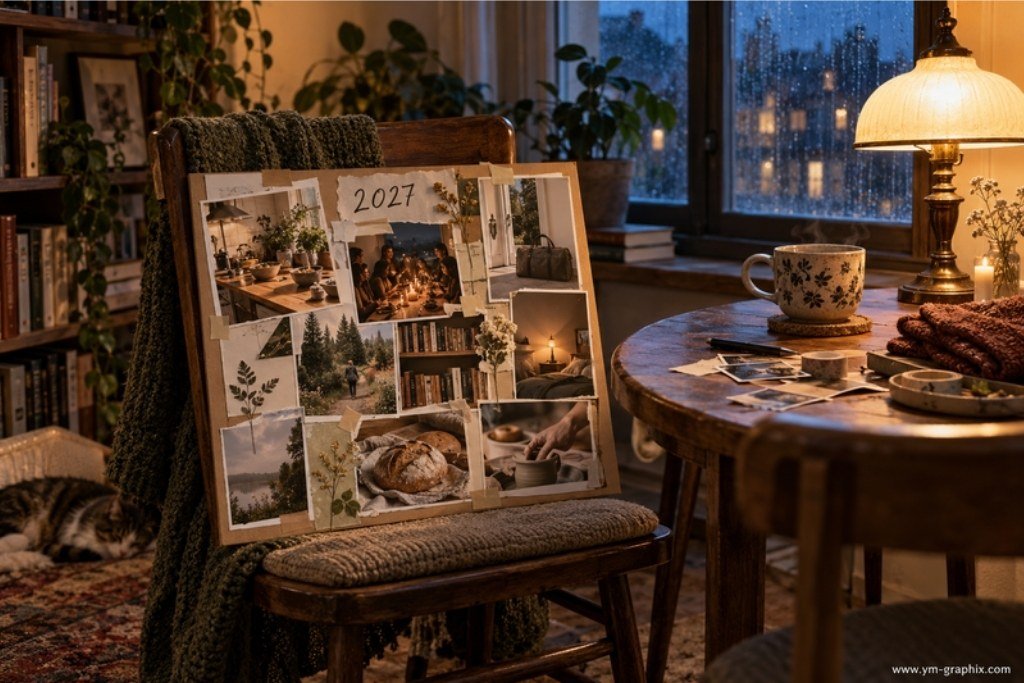
5. Cozy Lifestyle Story
This direction centers the life between the milestones: cooking, reading, resting, decorating, walking, hosting friends, or making something slowly. Use warm light, deep green, rust, candlelight, and familiar domestic textures.
Picture ideas: a kitchen in use, a chair beside a lamp, a rainy window, a dinner table, a stack of library books, a weekend bag, and the corner of a room you would be happy to return to.
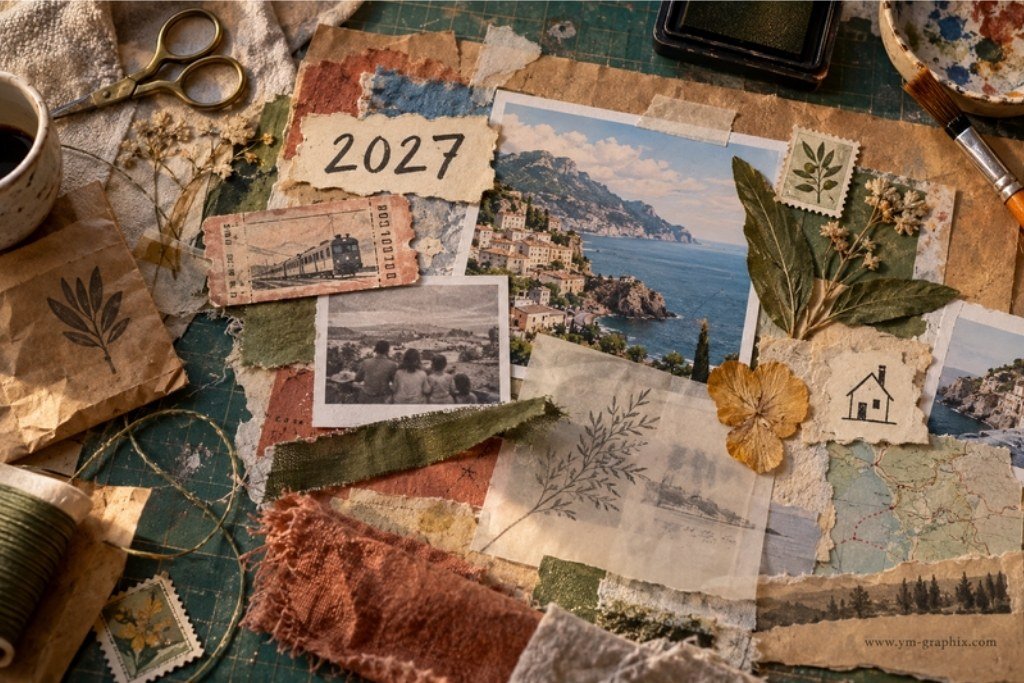
6. Mixed-Media Scrapbook
Layer torn paper, translucent tape, stamps, fabric, handwriting, paint marks, and imperfectly trimmed photographs. This style works especially well when you want the board to include memories as well as future plans.
Picture ideas: an old ticket beside a future destination, a photocopied family photo, packaging from a favorite place, a hand-drawn symbol, pressed leaves, and a short note written directly onto the board.
Choose pictures that feel like your life
A beautiful vision board can still feel empty when every image belongs to somebody else. Mix aspirational pictures with details that only make sense to you. A photograph you took, a room with the right morning light, a map marked with one specific route, or a project name typed on a scrap of paper can make the collage feel personal immediately.
A useful mix of vision board pictures
- One personal photograph that already contains the feeling you want more of.
- One place image showing a destination, neighborhood, room, or landscape.
- One process image showing the work behind a goal, not only the finished reward.
- One sensory detail such as fabric, color, food, light, water, or movement.
- One symbol that carries a private meaning without needing an explanation.
- One small achievable scene that could realistically happen in the next few weeks.
Add words, typography, and tiny notes
Words can give the images direction, but they do not need to dominate the board. Choose one central phrase, a few active verbs, and several small notes that connect a picture to a real intention.
A short line that captures the tone of 2027.
Create, finish, explore, protect, learn, share.
A project name, date, habit, place, or next step.
For an editorial look, combine a large serif headline with a clean sans serif and one handwritten accent. Avoid filling every gap with a quote. White space helps the most important words sound louder.
Turn the pieces into a real collage
A collage feels alive when the pieces interact. Let a photograph overlap a torn word. Tuck a small note beneath a larger image. Repeat one color in several places so the eye moves across the board. Change the scale instead of trimming everything into matching rectangles.
Five simple composition rules
- Choose one visual anchor before arranging the smaller pieces.
- Mix large, medium, and tiny elements to create rhythm.
- Group related images into mini stories instead of scattering them randomly.
- Use overlap, tape, and torn edges to connect separate materials.
- Stop before every empty space is filled.
The Central Story
Place one photograph, title, or symbolic image near the center. Arrange the rest of the board around it in loose rings. This works well when one idea defines the year, such as building a creative business, moving home, or living with more freedom.
The Editorial Flow
Use a diagonal path from one corner to the other. Combine one oversized image, a cropped headline, smaller supporting photographs, and generous empty space. The result feels closer to a magazine spread than a traditional goal board.
The Life Chapters
Create several loose clusters for areas such as home, travel, work, wellness, and experiences. Keep the clusters visually connected through repeated colors and materials. Avoid rigid boxes or labels that make the board look like a worksheet.
Give every goal a mini visual story
One photograph can represent an idea, but a group of details makes it feel tangible. Instead of adding a single generic image for each goal, build a tiny scene around it.
A train ticket, a hand-marked map, a morning street, a café table, and the kind of bag you would actually carry.
An open project, a workspace, a skill you want to learn, and a visible milestone instead of the word “success.”
A walk, a bedtime routine, home-cooked food, water, quiet time, and movement that feels sustainable.
The light, wall color, materials, reading corner, kitchen details, and feeling you want the room to create.
A sketchbook in progress, type samples, a camera, packaging, materials, or the place where the work will happen.
A dinner with friends, live music, a weekend outside, learning something new, or making time for play.
Bring your Vision Board 2027 together
- Choose the feeling and visual direction of the year.
- Collect more material than you expect to use.
- Remove attractive images that do not connect to your real life.
- Build several mini visual stories.
- Arrange everything before gluing or exporting.
- Add one personal photo, one handwritten note, and one concrete next step.
- Take away a few final pieces and let the composition breathe.
Want an easier starting point?
If you would rather begin with coordinated images, planning pages, or an editable layout, explore our guide to the best vision board kits and printables. Use a ready-made kit as raw material, then add your own photographs, notes, and details so the finished board still feels personal.
Make the board useful after January
A vision board does not have to become permanent wall décor. Keep it somewhere visible, but allow it to change. Clip a small Next step card beside one image. Replace a picture when a goal becomes clearer. Add a ticket, photograph, or handwritten date when something begins to happen.
The finished collage should support attention and action, not lock you into a version of the year you imagined months earlier. Updating the board is not a failure. It is evidence that your plans are becoming more specific.
FAQ about Vision Boards for 2027
What does a vision board look like?
A vision board can look like a layered paper collage, a neat pinboard, a journal spread, or a digital composition. Most include photographs, words, colors, and visual symbols, but there is no required layout. It should make sense to the person who created it.
Where can you find pictures for a vision board?
Use personal photos, magazines, brochures, postcards, old calendars, packaging, public-domain image collections, licensed graphics, or pictures you create yourself. Check usage rights before downloading and republishing images online.
Can a vision board include more words than pictures?
Yes. A board can be built around typography, handwritten notes, dates, lists, or short phrases. Use differences in scale, spacing, paper, and lettering style to keep a word-focused board visually interesting.
Should you put “2027” on your vision board?
You can use 2027 as the main title if the board represents this specific year. Try cutting the numbers from different papers, writing them by hand, or integrating them into the collage instead of placing a plain date above the design.
Can you change your vision board during the year?
Absolutely. Remove goals that no longer fit, replace vague images with more specific ones, and add photographs or keepsakes as plans become real. A vision board can evolve with the year.
Make 2027 look like your year
Start with one feeling, one photograph, and one honest sentence. The rest of the collage can grow around them. Save this guide for your next creative afternoon, and share it with someone who would love to build a board beside you.