Black and white patterns have an unusual advantage: once color disappears, the structure of a design becomes impossible to ignore. The eye starts noticing the relationship between positive and negative space, the direction of lines, the scale of the repeat and the rhythm created by individual shapes.
That is why the same geometric pattern can feel minimal, luxurious, retro or almost architectural depending on how it is used. A small repeat can behave like texture on packaging, while the exact same design enlarged across a poster can become the main visual statement.
For this Pattern Lab edit, I selected six different approaches rather than six nearly identical downloads. You will find mosaic patterns, geometric tiles, retro repeats and scalable seamless designs that can be adapted to very different creative projects.
From the Old “Ipanema” Mosaic Image to Modern Pattern Design
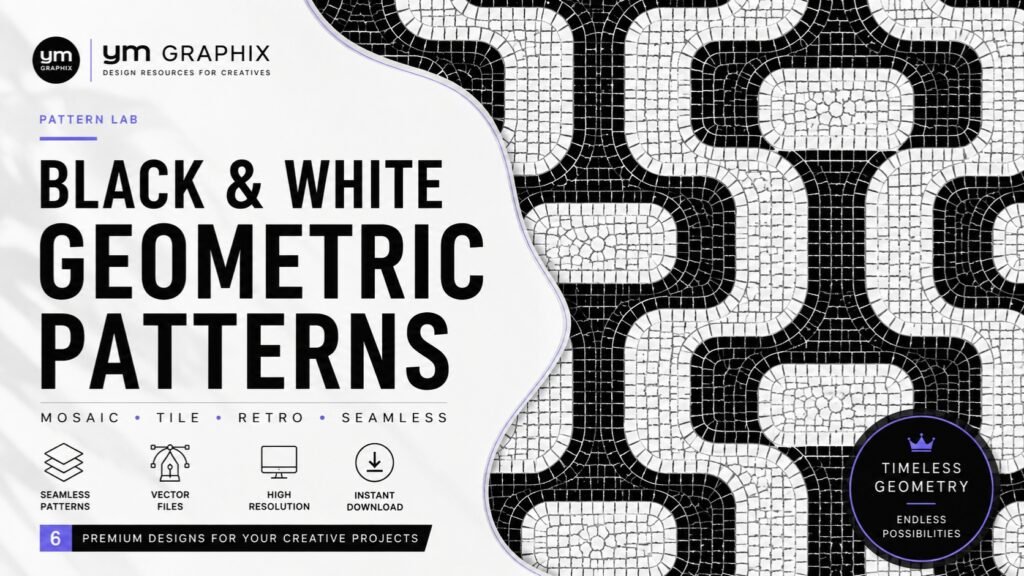
Some visitors may have arrived here through an older ym GRAPHIX Pinterest image originally stored as IPANEMA-graphic-design.jpg. Its strongest visual feature was not typography or photography, but a repeating black-and-white mosaic made from rounded geometric forms.
Rather than rebuilding that old page as a single image, this updated guide expands the same visual idea into something more useful: a curated collection of modern black and white mosaic patterns, geometric tile patterns and seamless repeats that can actually be used in new creative projects.
Three Things That Completely Change a Geometric Pattern
Tiny repeats behave like texture. Oversized shapes become graphic statements.
Large black areas feel bold and dramatic, while fine black lines on white create a lighter, more detailed surface.
A seamless repeat can extend across fabric, digital paper or a large background without obvious borders between tiles.
6 Black and White Geometric Patterns Worth Exploring
Each design below has a slightly different role. Some are closest to the mosaic character of the old Pinterest artwork, while others are better suited to retro layouts, flexible vector work or coordinated surface-design collections.
8 Seamless Black & White Geometric Tiles
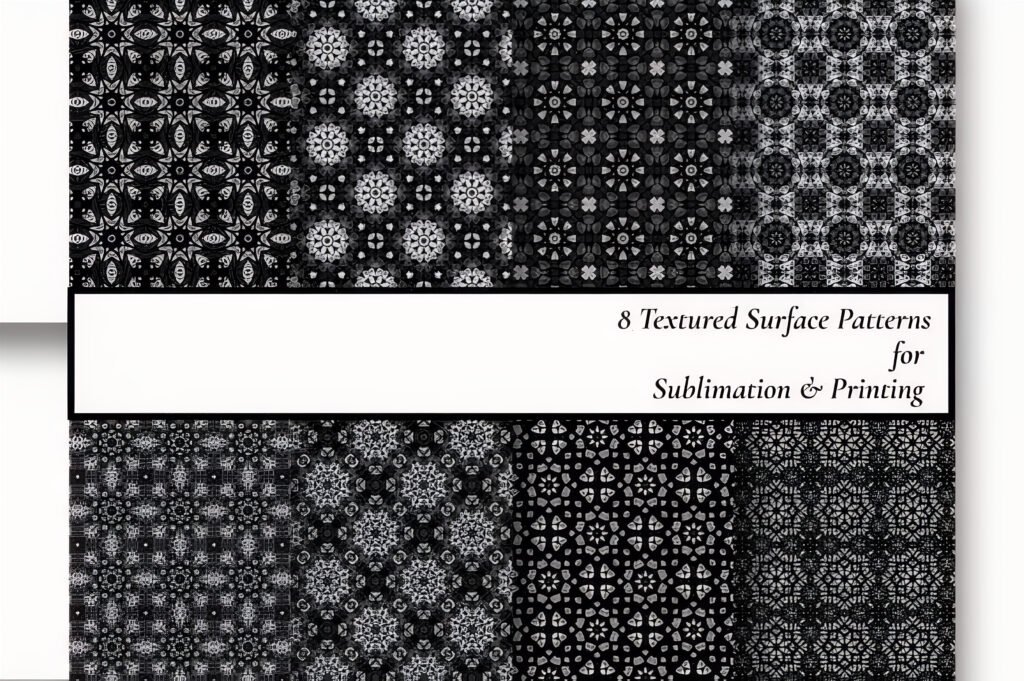
This is the strongest starting point for anyone who clicked because of the original black-and-white image. The collection contains eight seamless geometric tile patterns built around strong monochrome repetition.
Because the designs are already organized as repeating tiles, they can work well across larger areas where a single illustration would feel too static. Try them on digital backgrounds, stationery, packaging concepts or surface-design mockups.
Black and White Geometric Patterns
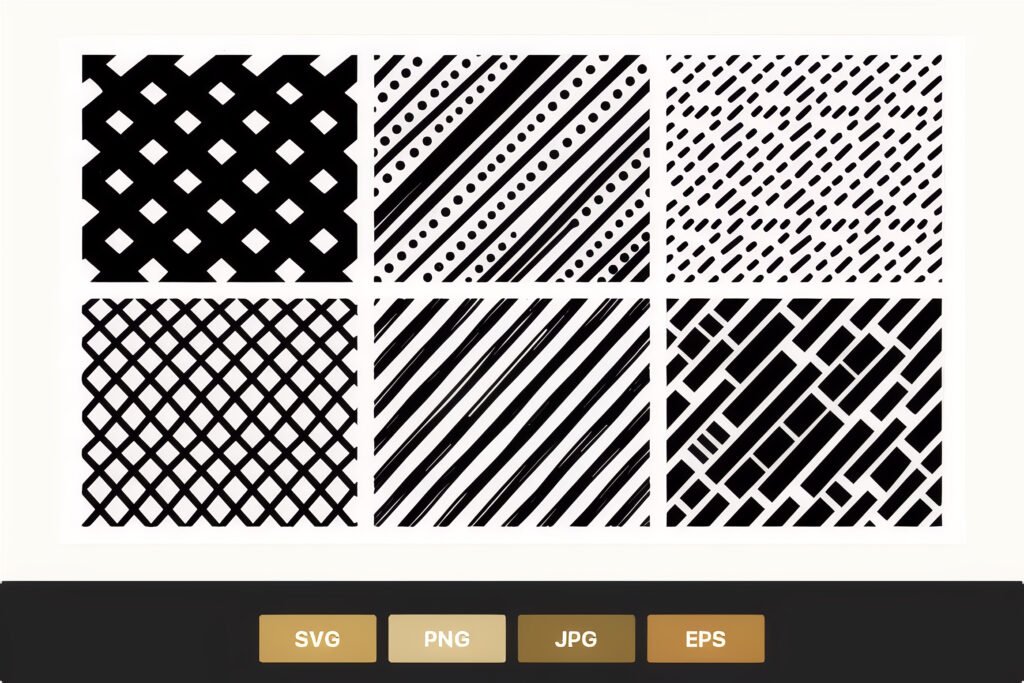
This collection is useful when you want several visual directions without downloading an enormous bundle. It includes six seamless black and white designs using grids, diagonal forms, dots and abstract geometric blocks.
The variety also makes the set useful for coordinated projects. One repeat can become the main background, while another from the same monochrome family can be used for labels, secondary panels or social graphics.
Seamless of Mosaic Tile Pattern Vector
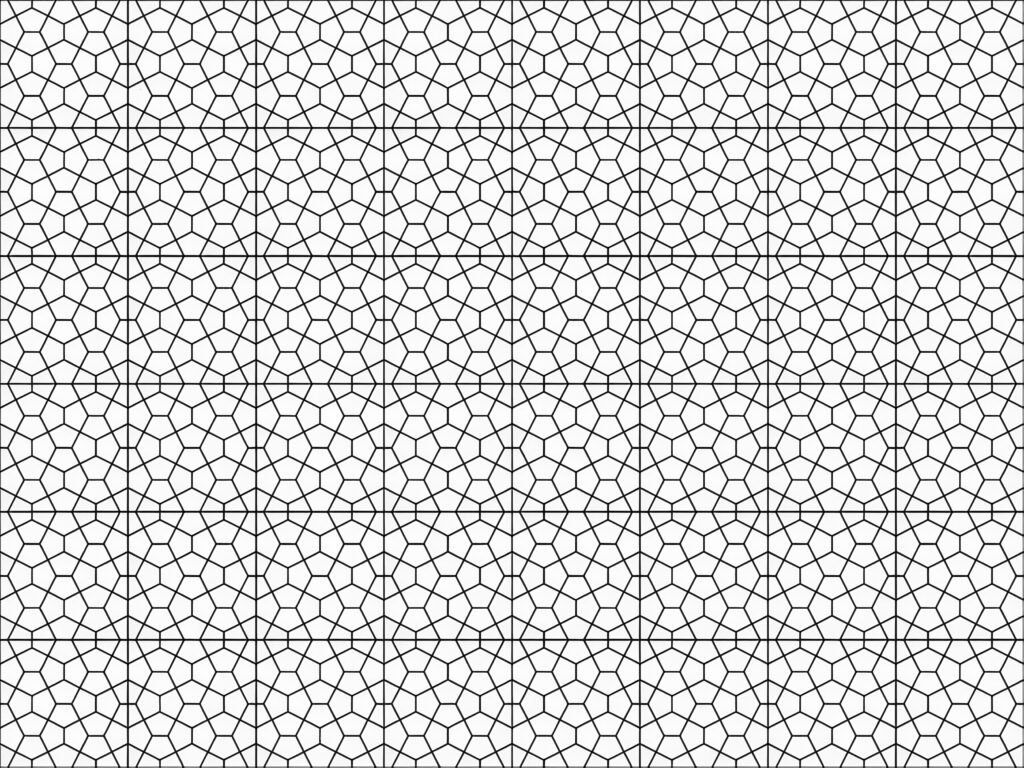
This design moves closer to the visual language of an architectural mosaic. Its modular structure creates a repeat that feels more like arranged tilework than a simple collection of circles or squares.
That makes it a useful option when a standard checkerboard feels too predictable. The design still has strong structure, but the repeated units create more movement and texture across the surface.
Retro Black & White Geometric Patterns
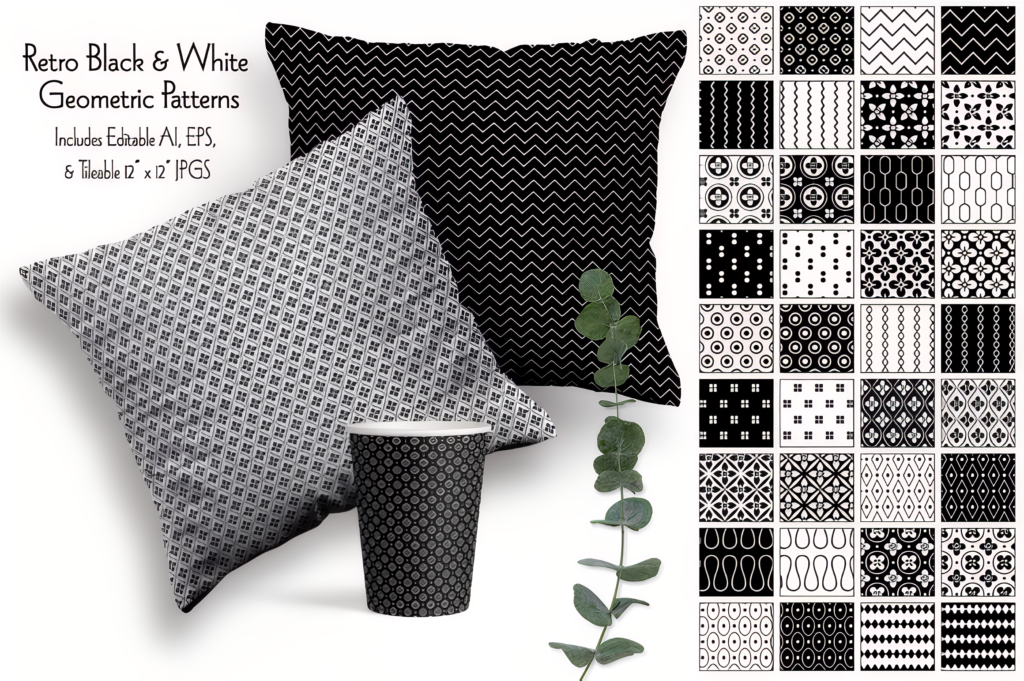
Not every monochrome pattern needs to feel ultra-modern. This larger collection contains 36 seamless retro-inspired patterns, giving you more opportunities to introduce a mid-century or vintage mood without relying on nostalgic colors.
Retro geometry can be especially effective behind simple typography. The pattern adds personality while a restrained black-and-white palette keeps the composition from becoming too busy.
Seamless Black Geometric Patterns
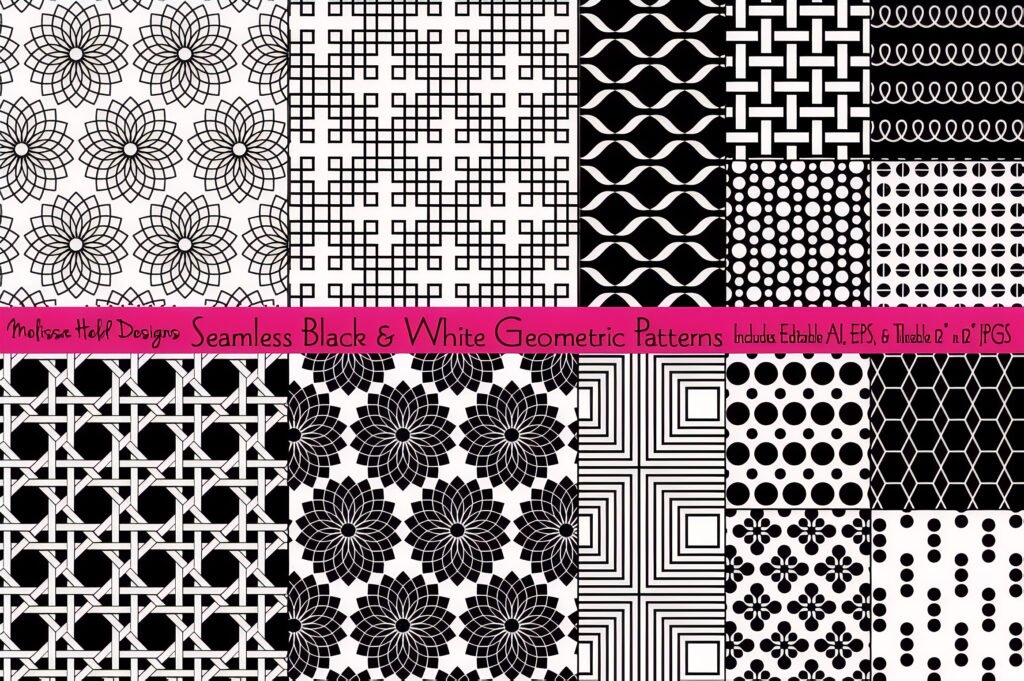
This set contains 14 black-and-white geometric designs plus reversed color versions. That makes it especially useful when you need several assets that clearly belong to the same visual system.
The inverted versions are more useful than they might initially appear. A mostly white repeat can serve as a calm page background, while its dark counterpart becomes a strong hero panel, label or packaging section.
Abstract Vector Black and White Patterns
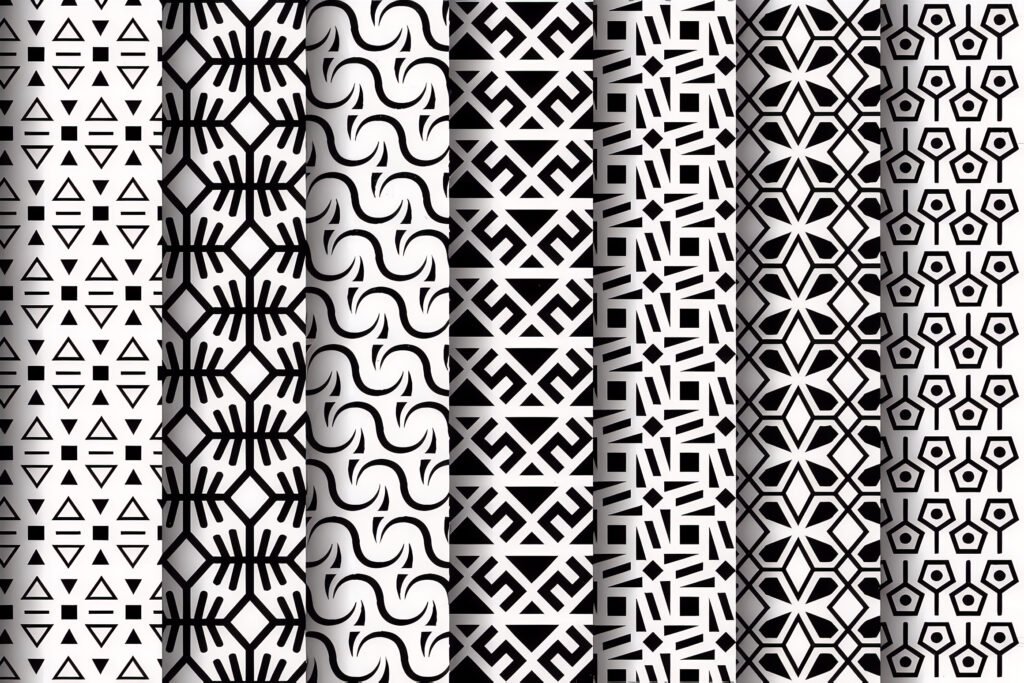
The final selection moves away from traditional tile motifs and toward abstract graphic geometry. The collection includes seven seamless vector-style designs based on repeating shapes and angular forms.
This is particularly useful for projects where scale may change dramatically. Clean vector geometry can move from a small packaging panel to an oversized poster concept without losing the crisp character that makes black-and-white graphics work.
Why Mosaic Patterns Feel Different from Simple Geometry
A simple geometric repeat is often built from clearly recognizable shapes such as circles, squares, stripes or polygons. Mosaic patterns can feel more tactile because larger shapes appear to be constructed from many smaller pieces.
Even when the final artwork is completely digital, the eye may interpret those small pieces almost like individual stones, ceramic tiles or fragments. The result is a surface with more visual movement than a perfectly flat vector shape.
This quality is especially effective in black and white mosaic patterns. There is already enough variation in the structure, so additional colors are not necessary to make the pattern interesting.
When the pattern already has a lot of movement, simplify everything around it. Pair an intricate mosaic with clean typography, generous white space and one restrained accent color instead of making every element compete for attention.
Geometric Tile Patterns: Background or Main Artwork?
A geometric tile pattern does not have to remain in the background. Scale is what determines whether the viewer reads it as texture or as illustration.
Small scale → subtle texture for packaging, stationery and digital layouts.
Medium scale → recognizable repeating pattern for fabrics, wrapping and scrapbook paper.
Large scale → statement geometry for posters, covers, social graphics and hero images.
This flexibility is one reason simple black and white geometric patterns are worth keeping in a design library. You do not necessarily need a new pattern for every project. Sometimes changing the crop, orientation or scale is enough to create a completely different visual result.
What Is a Seamless Geometric Pattern?
A seamless geometric pattern is constructed so the edges of one tile connect with the next copy. When the repeat is positioned correctly, the viewer should not immediately see where one tile ends and another begins.
That makes seamless artwork particularly useful for projects where a relatively small design needs to cover a much larger area: fabric concepts, digital papers, web backgrounds, wrapping paper, wallpaper-style graphics and large print surfaces.
The 2 × 2 Repeat Test
Place four copies of the tile in a two-by-two grid. If your eye immediately finds vertical or horizontal borders where the copies meet, the repeat may need adjustment. If the artwork reads as one continuous surface, the seamless tile is doing its job.
SVG, EPS, PNG or JPG: Which Pattern File Should You Use?
Pattern bundles often include several file formats, but they are not all meant for exactly the same workflow. Choosing the right one can save time later.
If you expect to change the scale or colors substantially, start with a vector format such as SVG or EPS when available. If you simply need an attractive ready-made background for a digital layout, PNG or JPG may be faster.
How to Pair Geometric Patterns with Typography
Let the irregular texture provide the personality while the typography stays calm and readable.
A confident headline can turn a vintage-style repeat into a complete poster concept.
Large typography gives the eye a clear focal point against a detailed surface.
High-contrast type can turn the darkest part of the pattern into a ready-made text panel.
7 Ways to Use Black and White Geometric Patterns
A monochrome pattern can move between very different design categories simply because it does not force you into a specific color identity.
How to Keep a Busy Pattern Looking Polished
1. Start with one hero pattern. Let it establish the rhythm before adding secondary textures or decorative elements.
2. Add a calm zone. A solid white, black or neutral panel gives typography, logos and important information somewhere to breathe.
3. Introduce color carefully. When a black-and-white composition already works, one small accent color can have far more impact than an entire palette.
Black & White Geometric Pattern FAQ
What is a geometric pattern?
A geometric pattern uses repeated shapes, lines or structured forms to create a visual arrangement. Common elements include squares, circles, stripes, grids, triangles and polygons.
What is the difference between mosaic and geometric patterns?
Geometric pattern is the broader term. Mosaic-style artwork often creates its surface from many smaller tile-like units, which can give the design a more fragmented, tactile or handcrafted appearance.
What makes a pattern seamless?
A seamless pattern has edges designed to connect with neighboring copies so the artwork can continue across a large area without obvious visible seams.
Where can I download black and white geometric patterns?
Creative marketplaces such as Creative Fabrica offer geometric, mosaic, tile and seamless pattern collections in multiple styles and file formats.
Are simple black and white geometric patterns good for branding?
Yes. Their limited palette makes them easy to combine with logos, typography and brand colors. They often work best as supporting visual elements rather than competing with the primary logo.
One Palette. Endless Geometry.
Start with one seamless black and white pattern, experiment with scale and pair it with clean typography. Sometimes the strongest design decision is simply letting the geometry do the work.